
In February 2025, scientists detected an asteroid heading our way. If it hit, it would create a crater the size of Manhattan and unleash a shockwave strong enough to flatten everything within 30 miles. Uh-oh, I’m out of here. Well, luckily for now, we’re in the clear. But the threat is coming back in 2028, and this time everything might change. You see, in 2025, NASA announced that an asteroid called 2024 YR4 had a 3. 1% chance of hitting Earth in 2032. Now, in asteroid terms, that’s high enough to sound the alarm. The asteroid itself is not the end of the dinosaurs level, but it’s big enough to level a city. The rock is about 130 to 300 ft wide. It’s roughly the size of a large jet.
Now, if something that size slammed into a populated area, it wouldn’t end the world, but it would result in a very, very bad day. And still, no one panicked, and scientists weren’t scrambling for bunkers. Because when we first spot an asteroid, we have to work with limited information. It’s like seeing a plane high up in the sky and trying to guess exactly which gate it’ll park at. That’s why astronomers rushed to gather more data. The asteroid itself seemed pretty ordinary. It was rocky, not some rare metal thing. It was first spotted in late 2024 by an observatory in Chile during a regular sky scan routine. There’s this group called the International Asteroid Warning Network. Their job is to keep an eye on space rocks that might try to ruin your day.
And back on January 29th, 2025, they announced that the chances of that particular asteroid hitting Earth had gone over 1%. Now, 1% might not sound like much, but that’s enough to make scientists start worrying. The impact risk for 2024 YR4 reached its highest point on February 18th, 2025. That’s when scientists calculated a 3. 1% chance it could hit Earth. But by February 23rd, after more observations came in, that possibility was essentially ruled out completely. The asteroid’s Torino Scale rating, which is used to categorize the impact risk of near-Earth objects like asteroids and comets within the next 100 years, was lowered to zero. It means it’s no longer considered a threat to Earth. Well, for now. But scientists still keep tracking it, and based on additional data, there is now a 4% chance it could hit the moon instead.
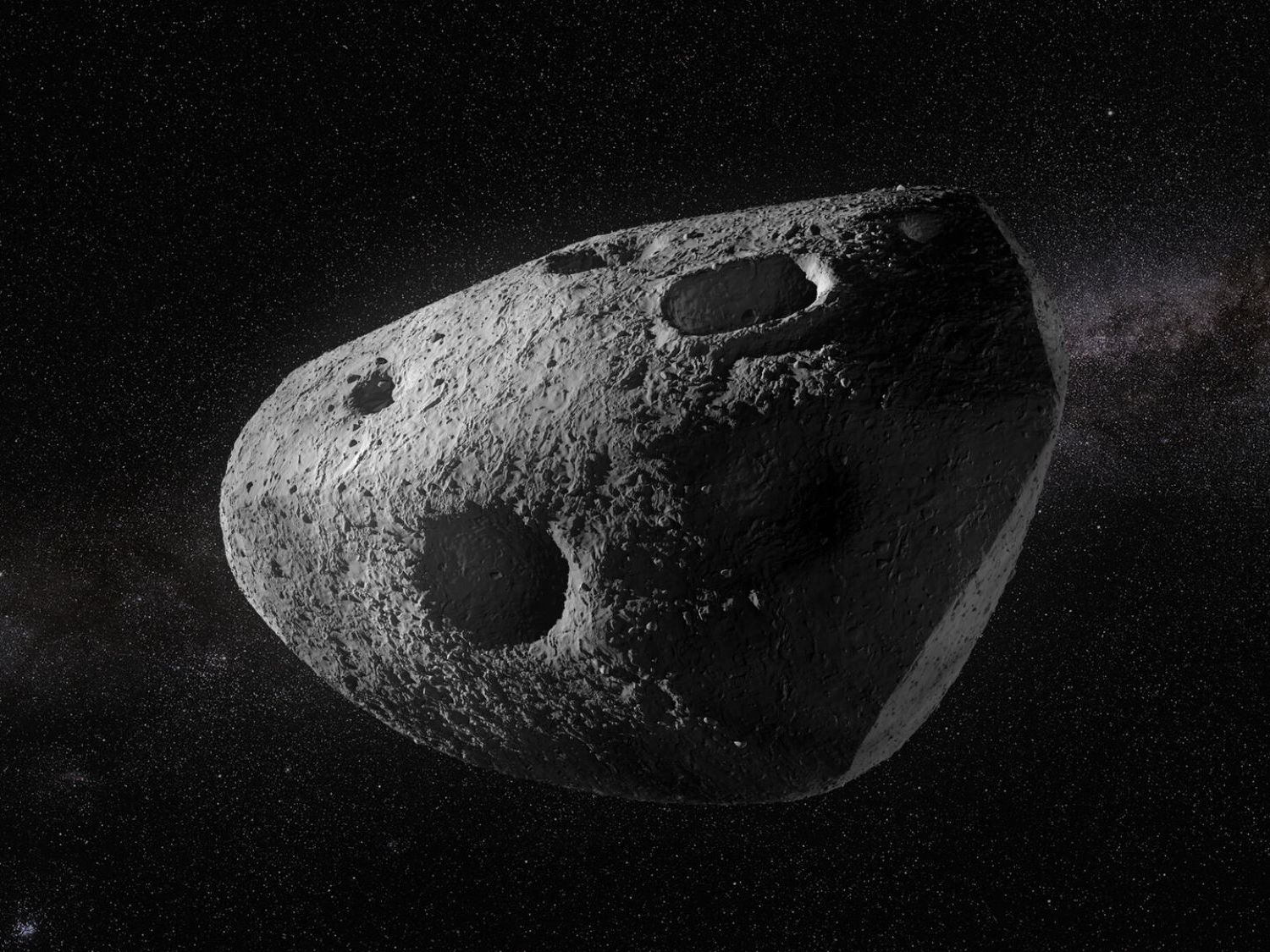
If that were to happen, it would be on December 22nd, 2032. Right now, the asteroid is expected to pass about 5,600 miles from the moon’s surface. However, there is a very large uncertainty range, about plus or minus 46,000 miles. So, it could easily miss the moon by a very large distance. The last time we had something this dangerous was back in 2004, with an asteroid called 99942 Apophis. Back then, it had a 2. 7 chance of hitting Earth in 2029. People were sweating. But after better observations, scientists ruled out the impact. This time, we actually passed that old record. 2024 YR4 is currently heading out toward Jupiter’s neighborhood, and won’t swing back close to us until 2028. And that’s when everything might change. If the risk jumps above 10%, the IAWN will send out a formal warning to the United Nations.
They’ll tell countries in possible impact zones to maybe start preparing, because if we talk about the damage, admittedly, this asteroid is not the 6-mi-wide monster that wiped out the dinosaurs 66 million years ago after hitting Earth. This here asteroid is in the city killer category. It sounds dramatic because it is, but it’s not some global extinction stuff. The real problem isn’t just its size, it’s its speed. If the asteroid hits, it could be moving nearly 40,000 mph. That’s like flying from New York to LA under 5 minutes. But still, the most likely scenario would be the asteroid exploding in the air before even hitting the ground. That’s called an air burst. But, if the asteroid is on the bigger end of the size estimates, it could actually reach the surface of our planet, slam into the ground, and make a crater.
So, that possibility is still on the table. As for where it could hit, the possible impact zone covers a huge area. Eastern Pacific, Northern South America, the Atlantic, Africa, the Arabian Peninsula, and South Asia. Um, raise your hand if we left you out. Keep in mind though that it’s way too early to make life decisions based on that. So, no packing up and moving yet. Besides, we’re not sitting here helpless. In 2022, NASA pulled off the DART mission, where they literally smashed a spacecraft into an asteroid to nudge it off course, and it worked. DART stands for Double Asteroid Redirection Test. It was built for NASA’s Planetary Defense Office. They wanted to know if we could push an asteroid just enough for it to miss our planet. So, they launched a spacecraft in November 2022, and it traveled through space for about 10 months.
The plan from day one was to crash it. The target was a small asteroid moon called Dimorphos, which is about 530 ft across, the size of a large stadium. Dimorphos orbits a bigger asteroid called Didymos. The two of them just circle each other out there in space. What’s important is that neither of them was threatening Earth. So, this was a safe test. Now, DART was basically a heavy spacecraft with a camera and a smart guidance system. The strategy was to hit Dimorphos at about 14,000 mph and let the force of that impact slightly change its orbit. In the final stretch, the spacecraft guided itself. It had to figure out which rock was which, lock onto the smaller one, and adjust its path without anyone steering it in real time. When it hit, the onboard camera sent back close-up images right up until the moment of impact.
Then the signal stopped because the spacecraft had done its job and smashed into the asteroid. There was also a small Italian CubeSat that separated earlier and stayed back to photograph the collision and the resulting debris cloud. Those images showed a huge plume of rock and dust blasting out into space. Well, after that, astronomers around the world started measuring the orbit of Dimorphos very carefully. Before the collision, it took 11 hours and 55 minutes to circle Didymos. After the impact, it took 11 hours and 23 minutes. That’s an impressive 32-minute difference. The interesting part was that the spacecraft alone wasn’t responsible for all of that shift. When DART struck the surface, it threw tons of rocky material outward. All that rock and dust blasting off gave the asteroid an extra push, stronger than the spacecraft alone could have done.
Scientists later realized that Dimorphos wasn’t a solid chunk of rock. It was more like a loose pile of rubble held together by gravity. That probably helped produce more debris and a bigger push. So, if we ever face a denser, more solid asteroid, the same technique might not have the same exact effect. That’s why scientists are also looking at other ideas, like using lasers to heat up part of the asteroid so bits of rock fly off and slowly push it in the opposite direction, like giving it a tiny built-in rocket. Or, they could place a spacecraft close to the asteroid and use its gravity to slowly pull it off course, like a small tugboat guiding a huge ship. Or, if things got really serious, use a nuclear blast as a last-resort shove.
Despite the success of the DART mission, NASA says we do not have a ready, reliable system that could stop a city-killing asteroid if one suddenly shows up on a collision course with Earth. The danger isn’t the giant, dinosaur-level asteroids. Those are huge and easy to track. Neither is it tiny rocks that burn up in the atmosphere all the time. It’s the middle-sized ones, around 500 ft wide. Scientists estimate there are about 25,000 near-Earth objects in that size range moving near Earth’s orbit. So far, we’ve only found about 40% of them. That means most of them are still out there, and we don’t know exactly where they are. The problem is they’re dark. Most don’t reflect much sunlight, so even powerful telescopes can miss them. To help fix that, NASA plans to launch a new space telescope called the Near Earth Object Surveyor.
Instead of looking for sunlight bouncing off asteroids, it’ll look for heat. Even a dark asteroid absorbs sunlight and gives off heat, and that’s easier to see in infrared. Astronomers just spotted an asteroid roughly the size of eight football fields. It spins so fast that it completes a full rotation in just under 2 minutes, which makes it the fastest asteroid ever found in its size class. If this bad boy hits Earth, the consequences will be, well, let’s just say everyone will notice. Yeah, think? Scientists caught MN45 using early data from an observatory on a mountaintop in Chile with a 3,200 megapixel camera. It will be scanning huge areas again and again for 10 years to catch what moves, what flashes, and what wasn’t there yesterday. The SuperCam takes an image every 40 seconds, and that’s how it noticed MN45.
The same equipment recently caught around 2,000 other asteroids, but our hero definitely stands out. Now, an asteroid spinning this fast probably didn’t start life as a calm, normal space rock. Scientists think a past collision could have smacked it hard enough to spin it up like a toy top. And if that impact was violent enough, MN45 might not even be the original asteroid, but a fragment that broke off from a much larger parent object. Basically, a piece of a bigger monster that got shattered long ago. Spinning fast in space isn’t just a flex, it’s dangerous because rotation creates stress, and stress tries to rip an asteroid apart. If a space rock doesn’t have enough internal strength, it doesn’t stay one object. It fragments into smaller pieces like a cookie that cracks when you twist it too hard. That’s why most asteroids never spin this fast.
Most of them aren’t solid boulders. They’re rubble piles, basically space gravel held together by weak gravity, like a floating clump of broken rocks. Astronomers have a kind of speed limit for asteroids. In the main asteroid belt between Mars and Jupiter, a typical rubble pile asteroid needs to rotate more slowly than about 2. 2 hours per full spin to stay intact. Anything faster than that starts entering the danger zone. So, if an asteroid spins faster than this limit, and it’s still big, that’s a massive clue. It must have unusually strong material inside, like solid rock or something even denser. Because if it were weak and crumbly, like most asteroids, it wouldn’t be spinning. It would already be a cloud of debris. The good news is that this hard rock asteroid isn’t coming for Earth. It’s at a safe distance from us, up in the asteroid belt.

But its existence screams something terrifying. If something this big and this extreme stayed unnoticed until now, what else could be hiding out there? Perhaps the real threat isn’t one record-breaking spinner, but a blind spot. Some simulations show that there could be a whole swarm of hidden city-killer asteroids hanging around Venus like cosmic pickpockets. As you can guess from the name, these asteroids are large enough to destroy an entire city. The reason they’re so hard to catch is that they hide in sunlight. From Earth, the area close to the sun looks bright and washed out, which makes it easy for objects near Venus’s orbit to blend into the glare. It’s like trying to spot a black cat in a dark room when someone shines a flashlight straight into your eyes. And this is where it gets personal. Because humans love pretending we control space.
But these Venus-hiding asteroids don’t care. Their orbits can shift slowly over time because of gravity nudges and long-term motion. And that means one of them could eventually get pushed onto an Earth-crossing path. Not today, not tomorrow, but someday. And in asteroid terms, someday always arrives faster than people expect. Now, let’s talk about a completely different kind of dangerous asteroid, Bennu. Now, Bennu isn’t a solid rock freak like MN45. Bennu is a rubble pile, a loose, clumpy near-Earth asteroid about 1,600 ft wide. It’s famous because NASA actually went there. The OSIRIS REx mission grabbed samples and brought them back to Earth. And what scientists found inside was straight-up mind-blowing. There were life-linked elements, including sugars like ribose and glucose, plus a weird gum-like organic material, and even ancient stardust. Down on Earth, ribose helps build RNA, and deoxyribose helps build DNA.
DNA and RNA are basically life’s instruction manuals. They store information the way a hard drive stores files. But, before you get too excited, no, finding these sugars on Bennu doesn’t mean it had life. But, it does mean the building blocks needed to build biology weren’t rare or special. They were everywhere, floating around in the early solar system. Scientists have already found ribose before in two meteorites that landed on Earth. So, it’s not totally unusual. All that is cool and totally benign, but Bennu has a scary side, too. It isn’t likely to hit Earth, but researchers still model it because it has a very small chance of impact in the late 2100s, including around 2182. And if Bennu hit, it wouldn’t wipe out dinosaurs again, but it could wreck climate patterns, blast huge regions, and trigger global-level effects, depending on where it struck.
Bennu is like the perfect reminder that space can carry both the ingredients of life and the power to erase it. And if you want more reminders like this, space is like a gallery of cool asteroids. Take Ceres, for example, which was first classified as a planet, then demoted to an asteroid, and then promoted to a dwarf planet again. Hey, talk about an identity crisis. One thing is for sure, it’s basically the boss of the main asteroid belt between Mars and Jupiter. No matter what label you slap on it, Ceres is a cold ball of rock and ice about 600 mi wide. Living there would feel like surviving on hard mode. Ceres has no substantial atmosphere, so you need a space suit just to breathe and to avoid freezing. Daytime temperatures range from about -136° to -28° F, and at night it drops to around -225°.

But, it also feel ridiculously light because Ceres gravity is only about 3% of Earth’s. A 150-lb person would feel like 4 and 1/2 lb there. Ceres is like a failed planet, leftover rubble from the solar system forming, a proto-planet that never fully grew up. NASA’s Dawn spacecraft went to see it in 2015 and spotted bright white patches that look like headlights from some strange spaceships. The biggest one sat inside a massive crater. Scientists thought it might be exposed ice, but it turned out to be sodium carbonate, salty mineral leftovers from briny water that bubbled up and vanished into space. Even crazier, that salty water may still come from a reservoir about 25 mi below the surface, and the activity could still be happening today. Life seems unlikely there, but with water involved, it might have existed in the past.
Now, this guy, Toutatis, another cool asteroid, has a weird double-lobed dumbbell shape. Instead of smooth spinning, it does this chaotic tumbling motion, like someone tossed a wrench into space and it never stopped flipping over. Scientists think part of the reason for this weird movement is that Toutatis might be two bodies barely touching. That makes it unstable right away. Then gravity shows up and makes it worse. As Toutatis travels through the solar system, the gravitational pull of Earth and even Jupiter can tug on it, messing with its rotation like invisible hands turning it at random. That’s what makes it so unpredictable. It’s not just spinning, but constantly getting nudged into new motion patterns. The path it takes through space brings it close to Earth, which sounds terrifying, but the even scarier part is the word chaotic.
Scientists determined its orbit for the next few centuries, and it won’t collide with Earth in the next six centuries, but we don’t know what can happen after that. So, as you can see, we don’t need to be afraid of every asteroid scientists have spotted, but we might have a good reason to fear the ones they haven’t seen yet. Imagine flying in a spacecraft in a cloud of asteroids at high speed. You dodge one, one more, and then hit the gas pedal to the floor and crash into an asteroid at full speed on purpose. This is exactly what NASA is going to do in the near future. The entire mission will begin at Vandenberg Air Force Base in California on November 24th. Let’s follow it step by step. So, the Falcon 9 booster rocket is already on the launch pad.
It’s as tall as a 22-story building or 11 giraffes, and it can get about 8 tons of cargo into orbit. So, you could send a big elephant into space and a supply of food for it. Countdown. 3 2 1 Ignition. Smoke clouds everywhere, and the rocket begins to gain altitude. Nine engines are working at full power to accelerate the rocket. At its peak, it reaches speeds 10 times faster than the speed of sound. And then, the rocket engines shut down and the rocket’s first stage undocks to return to Earth. A couple of seconds later, the second stage receives the ignition command. It turns on its one engine and climbs even higher to orbit. The cargo capsule then opens and releases the DART spacecraft. DART stands for Double Asteroid Redirection Test. Once released, the spaceship deploys two large solar panels.
It’ll convert solar energy into electrical energy to power a revolutionary ion engine. Conventional engines create thrust by burning tons of fuel and ejecting it outward. The rocket itself is essentially pushing off the emitted gases. The ion engine will not burn fuel. It’ll use a strong electric field to accelerate the ionized gas. Like conventional rockets, it’ll eject this gas and create thrust by repelling it. And though the ion engine produces less thrust, it can accelerate the spacecraft to higher speeds. So, regular rocket engines have an excellent performance on the road. They push the pedal to the metal, burning a bunch of fuel, while the ion engine slowly accelerates. But when a conventional rocket needs to make a refueling stop, the ion spacecraft will whiz past the regular one at insane speeds. So, the DART spacecraft begins its year-long journey.
By comparison, a flight to Mars would take about 7 months. Fast forward 1 year ahead and we’ve arrived. This is the asteroid Didymos. The far point of its orbit is two astronomical units from our star. That’s two Earth-Sun distances. At this point, the Sun begins to pull the asteroid back and then it approaches the closest point to the star, one Earth-Sun distance. That is, its orbit lies very close to the orbit of our planet. Didymos made its closest approach to Earth at a distance of about 4. 8 million miles. That’s 20 times farther than the moon’s orbit. It takes 770 days to complete one such revolution around the sun. So, Didymos is not considered a hazardous asteroid, but in the future, it’ll approach the Earth even closer, and the consequences of a collision with it could be catastrophic given its size.
It’s bigger than two Empire State Buildings, and it rotates at a rate of one revolution in 2 hours and 15 minutes. So, it has a tremendous amount of energy. Plus, it has an asteroid companion. It’s a small pebble 520 ft wide. It’s like 12 school buses or 10 train cars. It’s orbital period, that is, the time it takes the pebble to make a complete circle around the asteroid, is about 11. 9 hours. NASA believes that asteroids up to 80 ft wide are likely to burn up completely in our atmosphere due to friction with the air, so they’re not hazardous. Asteroids between 80 ft and half a mile in size will not burn completely and could cause severe damage. And asteroids over half a mile have the potential to wipe out large cities or even entire states. In that sense, we can consider Didymos potentially hazardous.
So, we’re going to test one way of defending against asteroids on it, kinetic impact. That’s why we sent DART here. So, our spacecraft is going to hit an asteroid, only not its main body, but its little companion. DART is already moving toward it at about 4 miles per second. At that speed, a trip from New York to Washington, D. C. would take less than a minute, and a trip across the United States from coast to coast would take about 10 minutes. DART is getting close. 3 seconds to impact, 2, 1, bam! The spacecraft crashes into the asteroid at full speed. What are your predictions? Asteroid explodes and is blown to pieces, or asteroid flies off the main body into space like a billiard ball.
Well, scientists predict that this collision will reduce the speed of the small asteroid by a fraction of a percent, but it’ll still be enough to reduce its orbital period by a few minutes. Then our telescopes on Earth will be able to study the effects of the collision in more detail. And to learn even more, we’ll send another spacecraft to Didymos on another mission. This is Hera. It’ll be launched in 2024 and is scheduled to arrive at Didymos around 2027. This spacecraft will carry a bunch of research equipment to assess the collision damage done by DART. When it arrives, Hera will take many pictures of the small asteroid, including a fresh impact crater. Hera will also be carrying two CubeSats. These are miniature space probes, smaller than a shoe box. It’ll launch these mini satellites and they will make an even closer approach to the asteroid.
They will study this space rock for 3 to 6 months. At the end of the mission, one of them will attempt to land on the asteroid surface to learn even more about its composition and internal structure. It’s also possible Hera will carry a mini impactor. This thing will have to make another impact on the asteroid. Then scientists will be able to evaluate the difference in impacts with a large spacecraft and a small one and understand how we can defend against asteroids in the future. In theory, we don’t need to send a giant rocket to a dangerous asteroid to destroy it. A single strike might be enough to shift the trajectory of the asteroid slightly. On a cosmic scale, changing the trajectory, even by a fraction, would dramatically change the asteroid’s finish point. But kinetic impact is not the only way to deal with hazardous asteroids.
Check out the gravity tractor. For this technique, we need to send a spacecraft toward the asteroid, too. Only it won’t crash into it. It’ll have to go into its orbit. Any asteroid has a force of attraction, and it’ll pull the spacecraft toward it. But, the spacecraft’s engines will keep it at the same altitude. So, the asteroid itself will start attracting to the spacecraft. This method is reliable enough, but it takes a long time. And it’ll only work if we detect a potentially hazardous asteroid many years before it arrives at Earth. We should have enough time to send a spacecraft to the asteroid and then carry out an asteroid tractor technique. The other option is a laser. When an asteroid is found, we need to aim a powerful laser beam at it. It’ll heat up a certain point on the asteroid, causing the material there to evaporate.
This is where physics comes into play. The material on the asteroid evaporates upwards. It makes the asteroid itself move downward, just like our rocket engines work. The burning fuel is ejected one way, and the spacecraft moves the other. We can also use solar power instead of lasers. To do that, we need to build a big space station, which would be equipped with a lot of magnifying glasses. Have you ever tried to burn letters on a wooden surface with a magnifying glass? Well, we’d be doing the same thing, but with an asteroid. The space station will have to focus lots of the sun’s rays into one point on the asteroid. Again, the material evaporates because of the high temperature, and this causes the asteroid to change its trajectory slightly so that it flies past our planet. How about foil? That’s right.
We can avoid a collision with an asteroid by using ordinary foil. We would have to wrap the asteroid in the same reflective material. Then the asteroid won’t absorb the sun’s rays, but will instead reflect them. This creates a little pressure on the surface of the asteroid. It’s as if the sun’s rays are pushing the asteroid, and it’ll be able to change its trajectory. And not the most obvious, but reliable option is conventional rocket engines. We can put several powerful engines on the asteroid. This would create thrust and change the trajectory of the asteroid. And if there are enough engines, we can even take control of the asteroid. So, when a bigger space rock appears on the horizon, we’ll turn on our engines and point the asteroid straight at it. Such a collision can completely destroy even a very large asteroid.
And it would make for one epic light show. Hundreds of millions of rocks orbit the sun within the asteroid belt between Mars and Jupiter. But, only some of them come relatively close to Earth. NASA classifies asteroids orbiting within 30 million miles of our planet as near-Earth objects. And inside this group, there are particularly worrisome objects. Those are so large and orbit so closely to our home planet that they could turn into a real threat to the world should a direct collision occur. At the moment, NASA is keeping a close eye on an asteroid named Bennu. It’s a fairly large space object that might smash into our planet in 159 years. According to the experts, the asteroid, which was first spotted in 1999, is quite likely to drift into the orbit of our planet.
If it happens, it might collide with Earth by the 24th of September, 2182. Asteroid Bennu is thought to be taller than the Empire State Building. If that hits our planet, the collision will release 1,200 megatons of energy. That’s an enormous amount of energy that nothing built on Earth could produce. Scientists from NASA believe that during the flyby in the 22nd century, there’s a tiny chance that the asteroid will pass through a gravitational keyhole. That’s a region of space that might set the space traveler on a certain path, which could result in the asteroid crashing into Earth. Bennu flies by our planet every 6 years. It has had three close encounters with Earth in 1999, 2005, and 2011. These days, scientists estimate the chance of the asteroid hitting our planet by 2182 as 1 in 2,700.