Earth has a new neighbor.
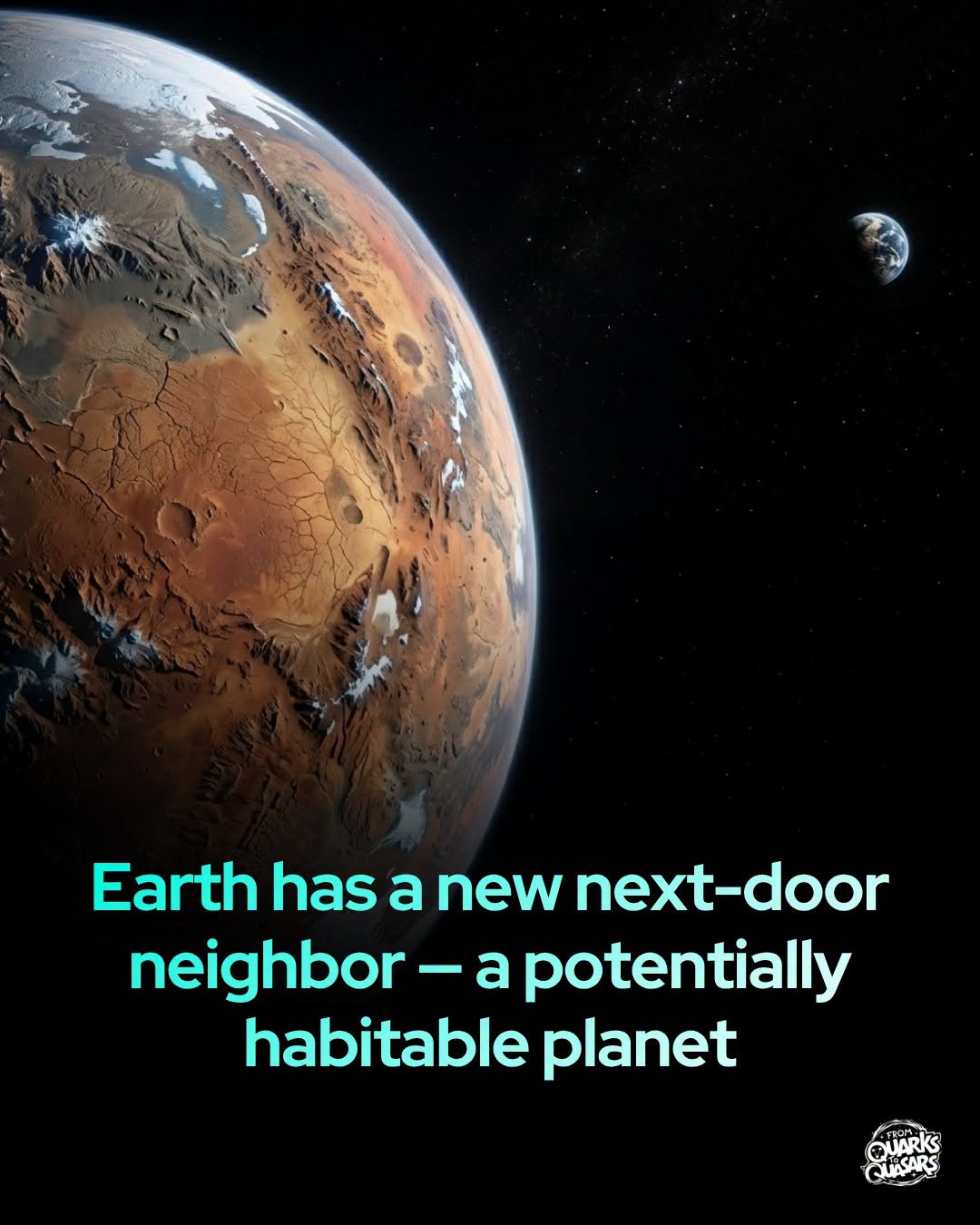
The planet, called GJ 3378b, orbits a nearby red dwarf star and is roughly twice the size of Earth. That makes it one of the closer worlds scientists can study in the search for conditions that might support life.

What makes the discovery especially interesting is its location.
GJ 3378b appears to sit in the star’s habitable zone, often called the Goldilocks zone. This is the region where temperatures may be suitable for liquid water to exist on a planet’s surface, as long as the planet has the right kind of atmosphere.

That last part is crucial.
Scientists do not yet know whether GJ 3378b has an atmosphere. Without one, liquid water would likely be difficult to maintain, and the planet’s surface could be exposed to harsh radiation from its star.
Researchers say the planet sits near what is sometimes called the “cosmic shoreline,” a boundary that helps estimate whether a planet’s gravity is strong enough to hold onto an atmosphere despite radiation from its host star.
Because the planet is relatively close by in cosmic terms, it could become an important target for future telescopes. NASA’s planned Habitable Worlds Observatory, expected sometime in the coming decades, is designed to study the atmospheres of Earth-like planets and search for possible chemical signs of life.

No one is saying life has been found.
But GJ 3378b gives astronomers something valuable: a nearby world that may be worth a much closer look.
Learn more:
“UC Irvine astronomers discover a new Earth-like exoplanet.” UCI