
Okay, see that tiny dot in the dark sky? Squint. Still nothing? No wonder. Even though it’s very close to Earth in cosmic terms, it’s still 18 light-years away from us. But one day, this distant world you can’t see with the unaided eye might become a new home to us because it likely has all the right stuff for life. They’re calling it GJ 251c, and it’s a super-Earth. Now, a quick side note. Super-Earth sounds epic, but it doesn’t mean it’s some fancy version of Earth with superpowers. It just means it’s bigger, somewhere between Earth and the gas giants like Neptune. These planets can be rocky, gassy, like me, or a mix of both. The super only refers to size, not whether you could actually spend your vacay there. Now, this planet sits perfectly in what scientists call the Goldilocks zone.
It’s not too hot, not too cold, just right for liquid water to hang around. And where there’s water, there could be life. We’re talking about at least some weird bacteria with serious survival skills. Of course, scientists are still trying to crack the code of what actually makes a planet come alive. There’s a whole mix of conditions, distance from the star, atmosphere, and temperature. And GJ 251c looks like a top contender. The first thing astronomers check when they stumble across a new super-Earth is if it’s rocky like Earth or just another ball of gas like Neptune. Because so far, Earth’s still the only rocky world we know that actually supports life. And second, could liquid water exist there? Because water is the ultimate life ingredient. Finding a planet that checks both boxes is super rare.
There, a chemical rocket trying to launch just 1 ton, which is about the weight of a small car, would have to be three times the size of the Saturn V. And that’s the biggest rocket ever built, which carried about 45 tons to the moon. Even if our hypothetical super-Earth inhabitants were smart enough to dream of space travel, they’d quickly run into a gravity-size problem. Sure, they might try to build launchpads high up in the mountains to shave off some of the crushing gravity. But on big planets, mountains don’t get tall. The immense gravity just squashes them down before they can grow sky-high. Oh, by the way, that’s why the tallest peaks in our solar system aren’t on the big planets at all. Mars, which is quite a lightweight world, hosts Olympus Mons, a volcano that towers 13 and 1/2 miles high.
But on a much heavier planet, mountains that tall would collapse under their own bulk before the rocket builders even got halfway up. So, our poor super-Earth engineers would probably need to build massive artificial launch towers just to get closer to thinner air. If they had flight technology, like airplanes or helicopters, they might try flying their rockets up first and then riding the engines in midair. We’re actually inching towards something like that on Earth with air-launched rockets. But what if that planet was a water world, and a lot of super-Earths might be? In that case, their smartest species might not even live on land. They easily could be aquatic geniuses. Picture dolphin-like engineers or squid astronomers forced to launch rockets from underwater, kind of ballistic missile submarine-type space launches. But even with all that effort, the physics is still tough.

For a super-Earth about 10 times Earth’s mass, chemical rockets could technically work, but the cost would be ridiculous. You’d need so much fuel that you’d have to burn through a sizable fraction of the planet just to get one ship into orbit. The only real options for super-Earth civilizations might be nuclear-powered rockets or space elevators made of materials stronger than anything we’ve discovered. Until then, those creatures might stay stuck on the ground with no satellites, no space stations, and no super-Earth NASA. So, as our telescopes keep spotting new, potentially habitable worlds, we probably shouldn’t expect to find any weather satellites circling above them. If there’s life out there on a super-Earth, it’s likely gazing up at the stars wishing it could visit them, just like we once did.
Hey, scientists may have just found a new planet that looks a lot like Earth with a big, icy catch. This world is about 150 light-years away, rocky, and circles a sun-like star on a schedule pretty close to ours. At first sight, it sounds promising, right? Well, slow down. There’s a catch here. It might be insanely cold, as cold as Mars in the deep freeze. You see, HD 137010b, that’s a mouthful, doesn’t seem to be a gas ball, so we would probably be able to stand on its surface. It’s a little bigger than Earth and goes around a star that’s pretty similar to our sun. This star is about 146 light-years away from our planet, which, in space terms, is close enough for scientists to study it instead of just, you know, squinting at it.

But what made people excited is the fact that this planet takes about one Earth year to go around its star. Now, that’s a big deal because most exoplanets dash around their stars in days or weeks. Even better, this newly discovered one might sit right on the outer edge of the habitable zone, also called the Goldilocks Zone. This region is not too hot and not too cold, which means that liquid water might exist on the planet if it has the right atmosphere. A big if, but still cool. Another thing that makes this planet extra special is how we see it. From Earth, it actually passes in front of its star. Imagine a tiny bug crawling across a flashlight beam. You got it. That makes it way easier for scientists to study things like its size, orbit, and maybe even what its atmosphere is made of.
And if all of this checks out, it could be one of the best Earth-like planet candidates we’ve ever found. And now, the bad news. This planet does not get much sunlight. HD 137010b gets less than 1/3 of the heat and light Earth gets from the sun. Even though its star is similar to our sun, it’s basically the sun’s quieter, dimmer cousin. You know, same type, lower wattage. What does that mean for the planet? It could be insanely cold. Scientists think the surface temperature might max out at around -90° Fahrenheit. And that’s not a grab a jacket cold, that’s your face freezes right away cold. For comparison, Mars has an average temperature of around -85° Fahrenheit.
So, this planet could actually be colder than Mars, a frozen desert, not to be confused with a frozen dessert that looks like it gave up on life a long time ago. Another plot twist. This planet isn’t officially a planet yet. At the moment, it’s still labeled a candidate. Scientists usually confirm planets by watching them pass in front of their star over and over again. Every time that happens, the star dims just a little bit. But, with this new space body, we’ve only seen one transit, a single 10-hour-long mini eclipse spotted during Kepler’s second mission called K2. Even with that one pass, astronomers could still learn a lot. They measured how long the planet’s shadow took to cross the star, about 10 hours. For comparison, Earth takes about 13 hours to cross the sun.
Then, they plugged that into orbital models and estimated that the planet probably takes about a year to go around its star. That’s impressive, but it’s still not enough. Astronomers need to see that dip in starlight repeat on schedule to be sure it’s really a planet and not some weird stellar wanderer. Unfortunately, this planet orbits far out and those transits are rare. You don’t get one every few days or weeks. You might have to wait a year or more for the next one. That’s one of the big reasons Earth-like planets are so hard to find in the first place. So now, scientists are just hoping that other space telescopes can help out. NASA’s TESS might catch another transit, or Europe’s CHEOPS telescope could help pin it down.
If neither of those catches it, we might have to wait for the next generation of space telescopes to get better data. Because even though this planet sounds like an ice cube in space, it’s not totally doomed. If it has a thick atmosphere, especially if it’s rich in carbon dioxide, it could trap heat really well, like a planet-sized winter coat. In that case, the planet might actually have a mild climate or even liquid water on its surface. Well, based on computer models, scientists say there’s about a 40% chance this distant world sits in the safe, conservative habitable zone. A chance that it’s located in a more relaxed, optimistic habitable zone reaches 51%. But, there’s also a 50/50 chance that the planet is actually outside the habitable zone altogether. In other words, this planet is basically a cosmic coin toss.
It could be a frozen wasteland worse than Mars, a chilly, barely survivable world, or a watery planet hiding under a thick atmosphere. HD 137010b isn’t the only place that has the potential to host human civilization in the future. In recent years, astronomers have been spotting new super-Earth planets orbiting remote stars. Now, checking our space vocabulary, super-Earth means a planet beyond the solar system with a mass higher than that of Earth, but below those of the ice giants of the solar system, Uranus and Neptune. One of those planets is Gliese 667 Cc. It’s just 22 light-years from Earth. But, even though it seems pretty close, it’s still around 129 trillion miles away from us. That’s around 1. 4 million times the average distance from the Earth to the sun. So, very, very far. The planet itself is around 3.
8 times as massive as Earth and completes one orbit around its host star within 28 days. In other words, a year on that Earth-like planet is 13 times shorter than a year on our planet. Luckily, the star is a cool red dwarf, so the exoplanet most likely lies in its habitable zone. But, there’s still a chance that this world might be regularly baked by the flares from its parent star. Then, there’s Kepler-22b. This world is way farther away than the previous world, more like 600 light-years away from our planet. It’s larger than Earth and is about 2 and 1/2 times our planet’s size. Sadly, we still don’t know whether this planet is rocky, liquid, or gaseous. The orbit of Kepler-22b is pretty similar to Earth’s. It takes the planet 290 days to orbit its G-class star, which is kind of similar to our sun.

But, this star is smaller and colder than ours. Now, don’t confuse this world with Kepler-69c. It lies a whopping 2,700 light-years away from us and is almost 70% larger than Earth. Researchers know nothing about its composition, but they found out that the planet needs 242 days to complete one orbit. This makes its position in its system similar to that of Venus in our solar system. At the same time, this world might be more hospitable than Venus since its host star is a bit less luminous, 80% of our sun. As for our Venus, it’s an extremely hostile place. You don’t want to go there. A runaway greenhouse effect caused by an atmosphere that’s about 96% carbon dioxide traps the heat. That pushes surface temperatures up to around 878° Fahrenheit, which is hot enough to melt lead.
On top of that, the air pressure is about 90 times stronger than that of Earth. And the whole planet is covered in thick clouds of corrosive sulfuric acid. Oh, boy. Compared to our neighbor, TOI 733b seems like a pretty friendly world. This planet was found in 2023. It’s floating 245 light-years away from Earth. The coolest thing about this planet is that it might have a massive ocean. According to scientists, this planet is likely to be completely covered with water. Does it mean there could be life on this super-Earth? Well, time will show. And who knows? Maybe soon we’ll find even more planets that could become a new home for people looking to explore the universe. As for HD 137010b, the fact that it checks so many Earth-style boxes makes it a really interesting find.
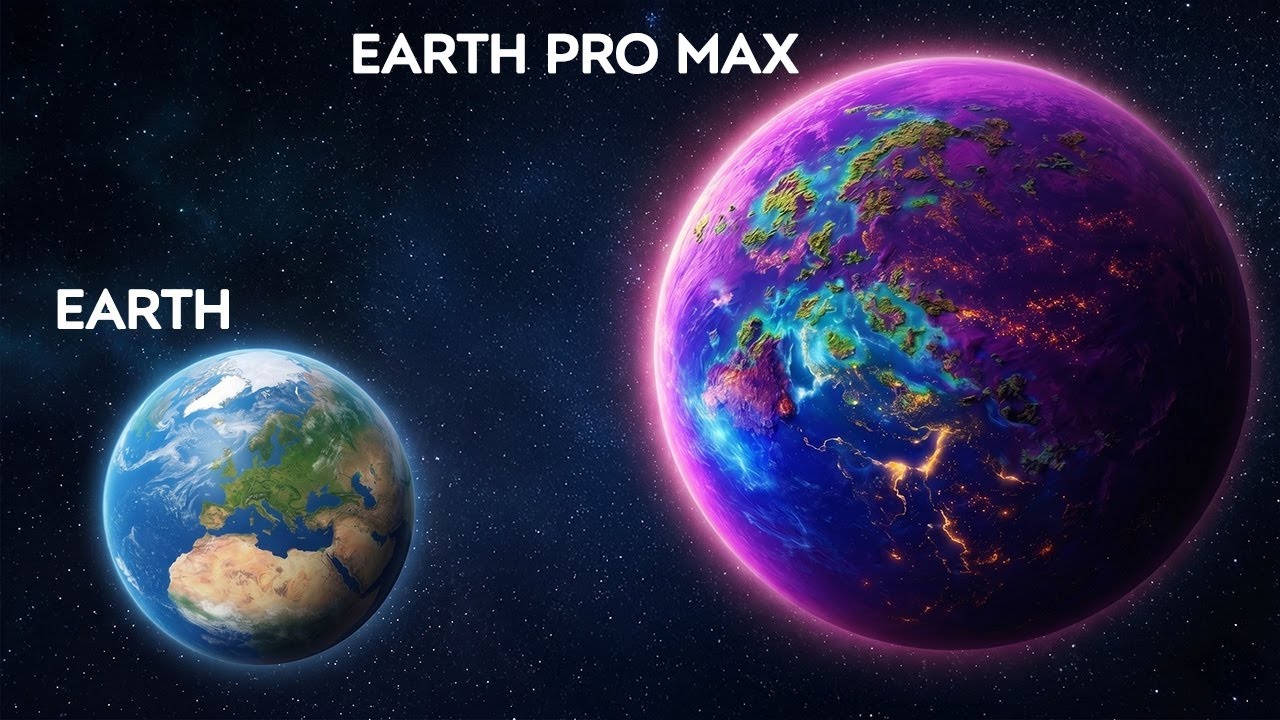
It’s not a backup Earth yet, but it makes scientists stop and say, “Okay, this one’s worth a closer look. ” or something similar. So, astronomers have just announced that they might have found signs of possible life on a planet outside our solar system. Wow. This distant world is called K2-18b, and it sits about 124 light-years away in the Leo constellation. So, what life are we talking about? Little green men? Octopus-like tentacle creatures? Well, not exactly. First things first, let’s define what life is. It’s what distinguishes animals and plants from inorganic matter, like the ability to grow, reproduce, and change. Now, what do we need to support life? If what comes to your mind is water, bingo. Scientists have the feeling that K2-18b might be covered in oceans. And if it’s so, it can support tiny forms of life like microbes.
A team of researchers from the UK and the US used the James Webb Space Telescope to look at the planet’s atmosphere. They found hints of two very special chemicals. On Earth, only living things can produce those. And the living things I’m talking about are mostly tiny ocean plants called phytoplankton. So, basically, this planet might indeed host life in the form of algae. Now, of course, scientists still need more proof before getting too excited. We should keep in mind that it’s possible that those chemicals were made by something we don’t understand yet, not necessarily by living things. But still, K2-18b is a big boy. It’s more than eight times heavier than Earth and about 2 and 1/2 times larger. So, what makes it even more interesting is that it’s located in the Goldilocks Zone around its star.
That means it’s not too hot and not too cold there, just right for the existence of liquid water, which is highly important for life as we know it. Astronomers study far-away planets like this by watching how their light changes when they pass in front of their star. This allows us to figure out what kinds of gases are in the planet’s atmosphere. Back in 2013, the James Webb Space Telescope found methane and carbon dioxide in the atmosphere of the planet. These are carbon-based molecules, and it was the first time they were found on a planet in the habitable zone. Scientists also saw a weak signal of a chemical DMS, which is mostly made by tiny ocean life here on Earth. So, the researchers pointed the telescope at the planet again a year later, using a different tool that could pick up more light details.
This time, they found much stronger signs of DMS and some related chemicals. But, the problem is the signals aren’t strong enough yet. They haven’t reached something called the five-sigma level, a parameter scientists use to confirm discoveries. Plus, even if the DMS really is there, it doesn’t automatically equal the existence of life. Scientists once found DMS on a comet, which means that it can be produced without any some kind of life taking part in the process. And still, the amount of DMS on K2-18b looks way higher than anything seen on Earth. That’s why some astronomers are sure it’s coming from something living. K2-18b has been a top pick for what scientists call a Hycean planet. This term means a big, watery world with thick hydrogen atmosphere. It’s not the kind of place where extraterrestrial civilizations, like in movies, would live.
Out of the thousands of exoplanets discovered so far, only a tiny handful hit that sweet spot. So, when astronomers realized GJ 251c might be one of those, and that is just 18 light-years away, well, they got pretty hyped. The planet’s star, GJ 251, is a red dwarf, a small, cool star about 1/3 the size of our sun. Because red dwarfs don’t put out as much heat, their Goldilocks zones are close in, which actually makes planets easier to find. They whip around faster, so scientists can pick up their orbital patterns more easily. Scientists have been keeping an eye on this star for a while, having collected over two decades of data. They already knew it hosted one planet, GJ 251b, another super-Earth that orbits every 14 days. But sadly, it’s way too close to the star to be habitable.
But let me tell you another thing, and I bet you didn’t expect anything like this. Even if another civilization existed on GJ 251c or some super-Earth, they might be totally stuck at home. A new study suggests that for all their fancy tech, they’d have a seriously tough time getting off the ground, and I mean it literally. The problem? Gravity. It’s a total spoilsport. The thing is, super-Earths are way bigger and heavier than our planet. As a result, their gravity pulls a lot harder. And when gravity cranks up, so does the fuel bill. It skyrockets, pun intended. Launching a rocket from one of those worlds would take exponentially more fuel than it does here on Earth. On a planet that’s about twice Earth’s radius, the mass can jump to roughly 10 times that of our home planet.
That means gravity could be more than twice as strong as what we feel on Earth. Think weighing 300 lb instead of 150 just by standing there. Now, this extra gravity isn’t all bad. It helps keep a thicker atmosphere, which means better protection from cosmic rays and radiation. That’s great news if you’re a microbe trying to evolve without getting zapped every few minutes. The thicker air could also help regulate temperature and even support more complex weather systems. So, for life starting out, that’s a big thumbs-up. But when it comes to building rockets, it’s a total nightmare. That same gravity that holds the atmosphere also chained you down. For example, let’s take Kepler-20b, a super-Earth about 1. 87 times Earth’s radius and 9. 7 times its mass.
There, a chemical rocket trying to launch just 1 ton, which is about the weight of a small car, would have to be three times the size of the Saturn V. And that’s the biggest rocket ever built, which carried about 45 tons to the moon. Even if our hypothetical super-Earth inhabitants were smart enough to dream of space travel, they’d quickly run into a gravity-size problem. Sure, they might try to build launchpads high up in the mountains to shave off some of the crushing gravity. But on big planets, mountains don’t get tall. The immense gravity just squashes them down before they can grow sky-high. Oh, by the way, that’s why the tallest peaks in our solar system aren’t on the big planets at all. Mars, which is quite a lightweight world, hosts Olympus Mons, a volcano that towers 13 and 1/2 miles high.
But on a much heavier planet, mountains that tall would collapse under their own bulk before the rocket builders even got halfway up. So, our poor super-Earth engineers would probably need to build massive artificial launch towers just to get closer to thinner air. If they had flight technology, like airplanes or helicopters, they might try flying their rockets up first and then riding the engines in midair. We’re actually inching towards something like that on Earth with air-launched rockets. But what if that planet was a water world, and a lot of super-Earths might be? In that case, their smartest species might not even live on land. They easily could be aquatic geniuses. Picture dolphin-like engineers or squid astronomers forced to launch rockets from underwater, kind of ballistic missile submarine-type space launches. But even with all that effort, the physics is still tough.
For a super-Earth about 10 times Earth’s mass, chemical rockets could technically work, but the cost would be ridiculous. You’d need so much fuel that you’d have to burn through a sizable fraction of the planet just to get one ship into orbit. The only real options for super-Earth civilizations might be nuclear-powered rockets or space elevators made of materials stronger than anything we’ve discovered. Until then, those creatures might stay stuck on the ground with no satellites, no space stations, and no super-Earth NASA. So, as our telescopes keep spotting new, potentially habitable worlds, we probably shouldn’t expect to find any weather satellites circling above them. If there’s life out there on a super-Earth, it’s likely gazing up at the stars wishing it could visit them, just like we once did.
Hey, scientists may have just found a new planet that looks a lot like Earth with a big, icy catch. This world is about 150 light-years away, rocky, and circles a sun-like star on a schedule pretty close to ours. At first sight, it sounds promising, right? Well, slow down. There’s a catch here. It might be insanely cold, as cold as Mars in the deep freeze. You see, HD 137010b, that’s a mouthful, doesn’t seem to be a gas ball, so we would probably be able to stand on its surface. It’s a little bigger than Earth and goes around a star that’s pretty similar to our sun. This star is about 146 light-years away from our planet, which, in space terms, is close enough for scientists to study it instead of just, you know, squinting at it.
But what made people excited is the fact that this planet takes about one Earth year to go around its star. Now, that’s a big deal because most exoplanets dash around their stars in days or weeks. Even better, this newly discovered one might sit right on the outer edge of the habitable zone, also called the Goldilocks Zone. This region is not too hot and not too cold, which means that liquid water might exist on the planet if it has the right atmosphere. A big if, but still cool. Another thing that makes this planet extra special is how we see it. From Earth, it actually passes in front of its star. Imagine a tiny bug crawling across a flashlight beam. You got it. That makes it way easier for scientists to study things like its size, orbit, and maybe even what its atmosphere is made of.
And if all of this checks out, it could be one of the best Earth-like planet candidates we’ve ever found. And now, the bad news. This planet does not get much sunlight. HD 137010b gets less than 1/3 of the heat and light Earth gets from the sun. Even though its star is similar to our sun, it’s basically the sun’s quieter, dimmer cousin. You know, same type, lower wattage. What does that mean for the planet? It could be insanely cold. Scientists think the surface temperature might max out at around -90° Fahrenheit. And that’s not a grab a jacket cold, that’s your face freezes right away cold. For comparison, Mars has an average temperature of around -85° Fahrenheit.
So, this planet could actually be colder than Mars, a frozen desert, not to be confused with a frozen dessert that looks like it gave up on life a long time ago. Another plot twist. This planet isn’t officially a planet yet. At the moment, it’s still labeled a candidate. Scientists usually confirm planets by watching them pass in front of their star over and over again. Every time that happens, the star dims just a little bit. But, with this new space body, we’ve only seen one transit, a single 10-hour-long mini eclipse spotted during Kepler’s second mission called K2. Even with that one pass, astronomers could still learn a lot. They measured how long the planet’s shadow took to cross the star, about 10 hours. For comparison, Earth takes about 13 hours to cross the sun.
Then, they plugged that into orbital models and estimated that the planet probably takes about a year to go around its star. That’s impressive, but it’s still not enough. Astronomers need to see that dip in starlight repeat on schedule to be sure it’s really a planet and not some weird stellar wanderer. Unfortunately, this planet orbits far out and those transits are rare. You don’t get one every few days or weeks. You might have to wait a year or more for the next one. That’s one of the big reasons Earth-like planets are so hard to find in the first place. So now, scientists are just hoping that other space telescopes can help out. NASA’s TESS might catch another transit, or Europe’s CHEOPS telescope could help pin it down.
If neither of those catches it, we might have to wait for the next generation of space telescopes to get better data. Because even though this planet sounds like an ice cube in space, it’s not totally doomed. If it has a thick atmosphere, especially if it’s rich in carbon dioxide, it could trap heat really well, like a planet-sized winter coat. In that case, the planet might actually have a mild climate or even liquid water on its surface. Well, based on computer models, scientists say there’s about a 40% chance this distant world sits in the safe, conservative habitable zone. A chance that it’s located in a more relaxed, optimistic habitable zone reaches 51%. But, there’s also a 50/50 chance that the planet is actually outside the habitable zone altogether. In other words, this planet is basically a cosmic coin toss.
It could be a frozen wasteland worse than Mars, a chilly, barely survivable world, or a watery planet hiding under a thick atmosphere. HD 137010b isn’t the only place that has the potential to host human civilization in the future. In recent years, astronomers have been spotting new super-Earth planets orbiting remote stars. Now, checking our space vocabulary, super-Earth means a planet beyond the solar system with a mass higher than that of Earth, but below those of the ice giants of the solar system, Uranus and Neptune. One of those planets is Gliese 667 Cc. It’s just 22 light-years from Earth. But, even though it seems pretty close, it’s still around 129 trillion miles away from us. That’s around 1. 4 million times the average distance from the Earth to the sun. So, very, very far. The planet itself is around 3.
8 times as massive as Earth and completes one orbit around its host star within 28 days. In other words, a year on that Earth-like planet is 13 times shorter than a year on our planet. Luckily, the star is a cool red dwarf, so the exoplanet most likely lies in its habitable zone. But, there’s still a chance that this world might be regularly baked by the flares from its parent star. Then, there’s Kepler-22b. This world is way farther away than the previous world, more like 600 light-years away from our planet. It’s larger than Earth and is about 2 and 1/2 times our planet’s size. Sadly, we still don’t know whether this planet is rocky, liquid, or gaseous. The orbit of Kepler-22b is pretty similar to Earth’s. It takes the planet 290 days to orbit its G-class star, which is kind of similar to our sun.
But, this star is smaller and colder than ours. Now, don’t confuse this world with Kepler-69c. It lies a whopping 2,700 light-years away from us and is almost 70% larger than Earth. Researchers know nothing about its composition, but they found out that the planet needs 242 days to complete one orbit. This makes its position in its system similar to that of Venus in our solar system. At the same time, this world might be more hospitable than Venus since its host star is a bit less luminous, 80% of our sun. As for our Venus, it’s an extremely hostile place. You don’t want to go there. A runaway greenhouse effect caused by an atmosphere that’s about 96% carbon dioxide traps the heat. That pushes surface temperatures up to around 878° Fahrenheit, which is hot enough to melt lead.
On top of that, the air pressure is about 90 times stronger than that of Earth. And the whole planet is covered in thick clouds of corrosive sulfuric acid. Oh, boy. Compared to our neighbor, TOI 733b seems like a pretty friendly world. This planet was found in 2023. It’s floating 245 light-years away from Earth. The coolest thing about this planet is that it might have a massive ocean. According to scientists, this planet is likely to be completely covered with water. Does it mean there could be life on this super-Earth? Well, time will show. And who knows? Maybe soon we’ll find even more planets that could become a new home for people looking to explore the universe. As for HD 137010b, the fact that it checks so many Earth-style boxes makes it a really interesting find.
It’s not a backup Earth yet, but it makes scientists stop and say, “Okay, this one’s worth a closer look. ” or something similar. So, astronomers have just announced that they might have found signs of possible life on a planet outside our solar system. Wow. This distant world is called K2-18b, and it sits about 124 light-years away in the Leo constellation. So, what life are we talking about? Little green men? Octopus-like tentacle creatures? Well, not exactly. First things first, let’s define what life is. It’s what distinguishes animals and plants from inorganic matter, like the ability to grow, reproduce, and change. Now, what do we need to support life? If what comes to your mind is water, bingo. Scientists have the feeling that K2-18b might be covered in oceans. And if it’s so, it can support tiny forms of life like microbes.
A team of researchers from the UK and the US used the James Webb Space Telescope to look at the planet’s atmosphere. They found hints of two very special chemicals. On Earth, only living things can produce those. And the living things I’m talking about are mostly tiny ocean plants called phytoplankton. So, basically, this planet might indeed host life in the form of algae. Now, of course, scientists still need more proof before getting too excited. We should keep in mind that it’s possible that those chemicals were made by something we don’t understand yet, not necessarily by living things. But still, K2-18b is a big boy. It’s more than eight times heavier than Earth and about 2 and 1/2 times larger. So, what makes it even more interesting is that it’s located in the Goldilocks Zone around its star.
That means it’s not too hot and not too cold there, just right for the existence of liquid water, which is highly important for life as we know it. Astronomers study far-away planets like this by watching how their light changes when they pass in front of their star. This allows us to figure out what kinds of gases are in the planet’s atmosphere. Back in 2013, the James Webb Space Telescope found methane and carbon dioxide in the atmosphere of the planet. These are carbon-based molecules, and it was the first time they were found on a planet in the habitable zone. Scientists also saw a weak signal of a chemical DMS, which is mostly made by tiny ocean life here on Earth. So, the researchers pointed the telescope at the planet again a year later, using a different tool that could pick up more light details.
This time, they found much stronger signs of DMS and some related chemicals. But, the problem is the signals aren’t strong enough yet. They haven’t reached something called the five-sigma level, a parameter scientists use to confirm discoveries. Plus, even if the DMS really is there, it doesn’t automatically equal the existence of life. Scientists once found DMS on a comet, which means that it can be produced without any some kind of life taking part in the process. And still, the amount of DMS on K2-18b looks way higher than anything seen on Earth. That’s why some astronomers are sure it’s coming from something living. K2-18b has been a top pick for what scientists call a Hycean planet. This term means a big, watery world with thick hydrogen atmosphere. It’s not the kind of place where extraterrestrial civilizations, like in movies, would live.