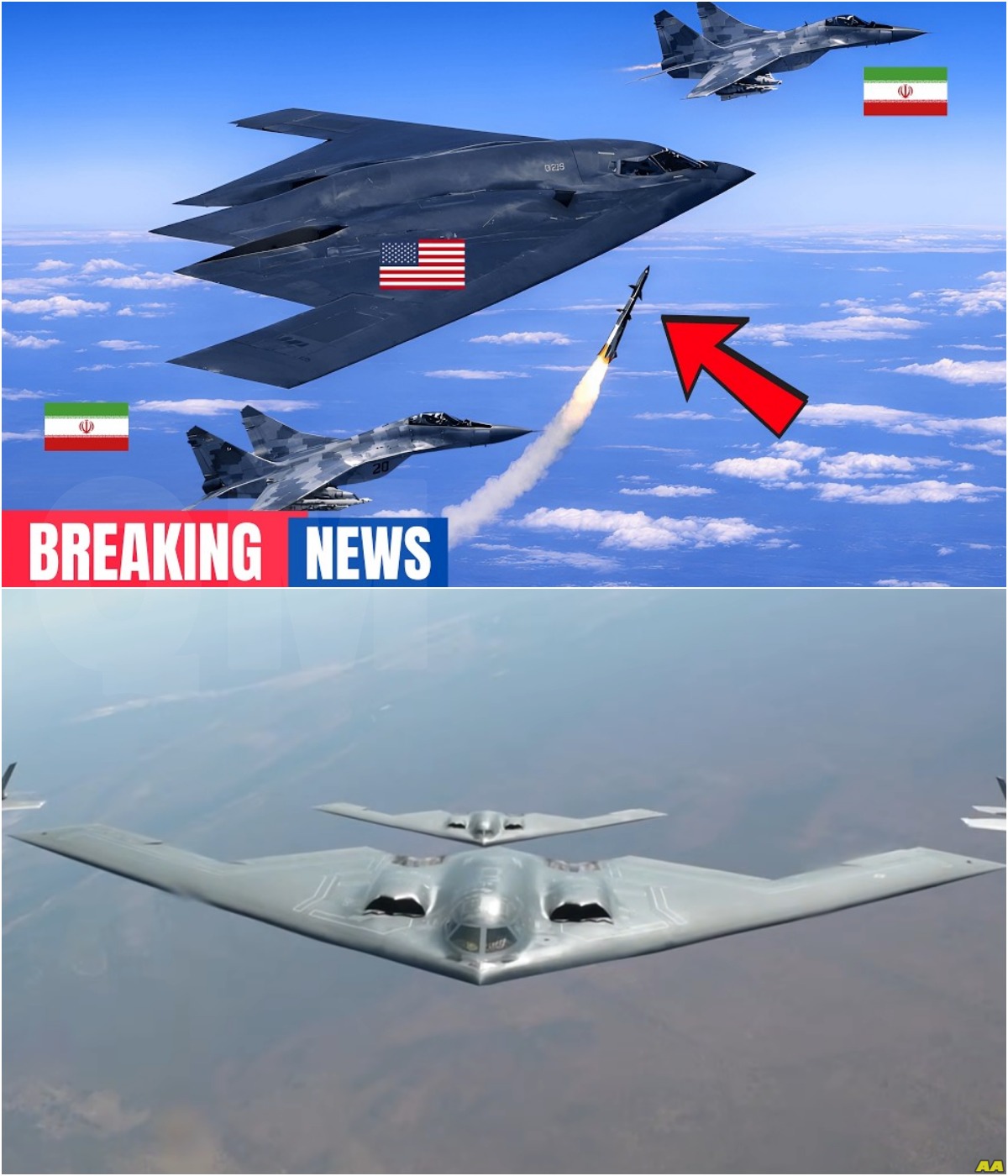
Radar locks, missiles away, Iranian pilots celebrating a “kill” — but hidden F-35s and F-22s were already closing in from nowhere. What unfolded was a brutal, lightning-fast ambush that left Tehran’s air force in flames and the world stunned.
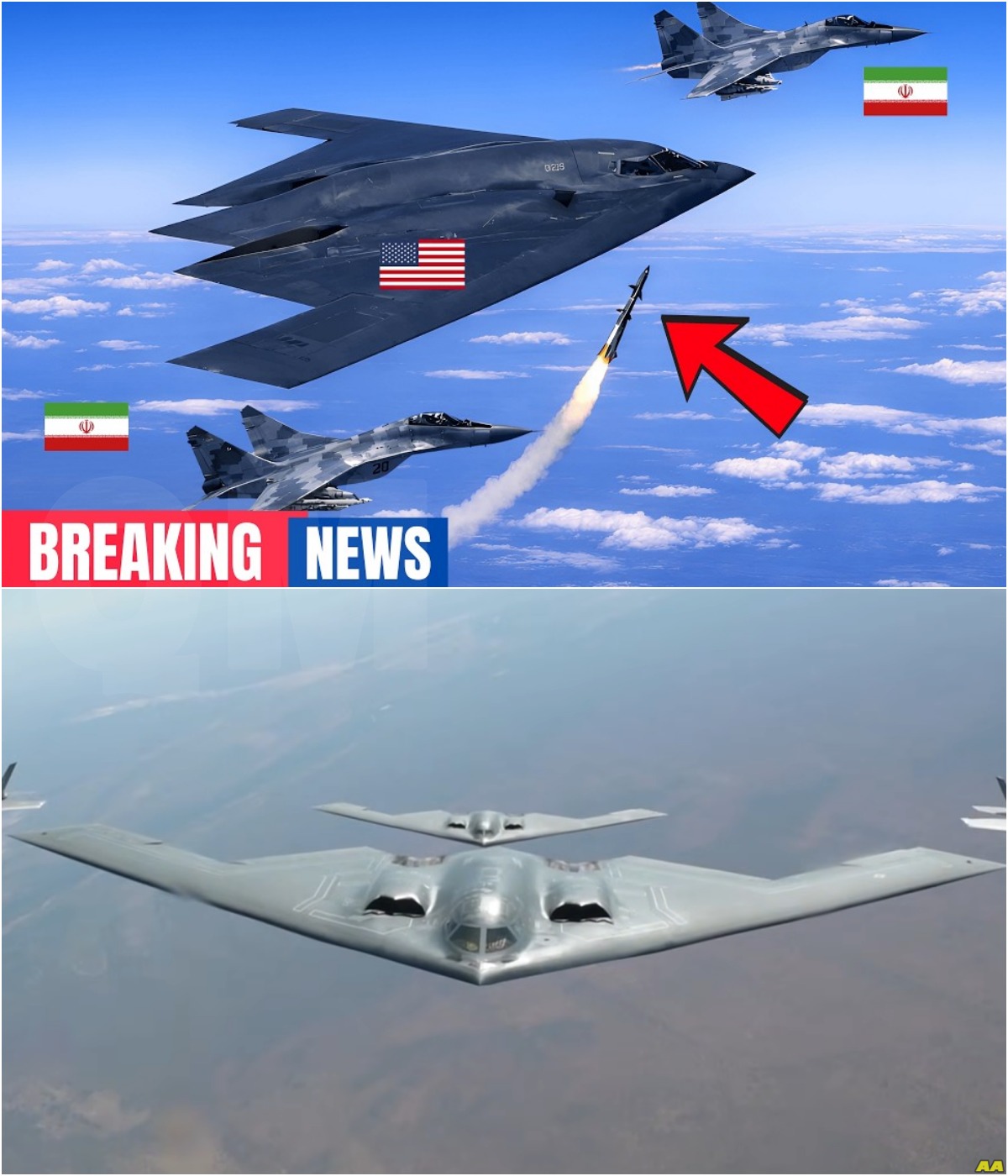
Amid the escalating U.S.-led Operation Epic Fury against Iran, reports and viral claims have circulated about a dramatic 12-minute aerial confrontation in which U.S. stealth fighters allegedly ambushed Iranian jets attempting to engage American assets. The incident, heavily promoted on social media and some online outlets, has fueled speculation about a decisive U.S. air dominance display. However, official U.S. military statements and verified accounts emphasize that Iran’s air force has suffered near-total destruction primarily on the ground through preemptive strikes, with limited evidence of large-scale dogfights involving surviving Iranian aircraft. The “12-minute showdown” narrative appears rooted in unverified videos, exaggerated social media posts, and simulations, highlighting the fog of war in this rapidly unfolding conflict.
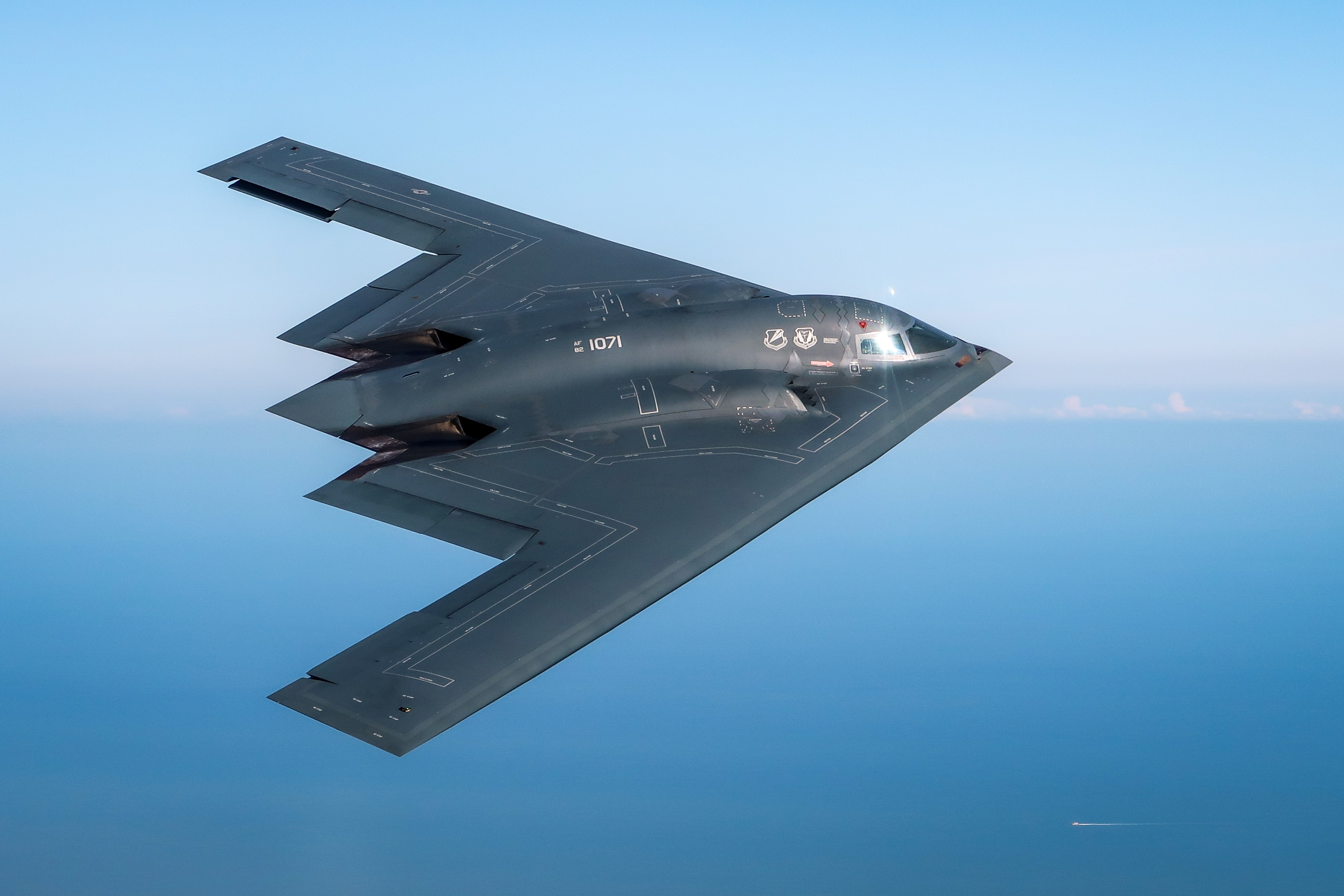
The broader air campaign began on February 28, 2026, when U.S. and Israeli forces launched coordinated strikes under Operation Epic Fury (U.S.) and Operation Roaring Lion (Israel). In the opening hours, American and Israeli aircraft targeted Iranian command centers, air defense radars, missile sites, and airfields across multiple provinces. U.S. Central Command (CENTCOM) reported striking over 1,000 targets in the first 24 hours, escalating to more than 1,700 by the 72-hour mark. Key assets included B-2 Spirit stealth bombers dropping 2,000-pound precision-guided munitions on hardened ballistic missile facilities, F-35 Lightning II and F-22 Raptor stealth fighters providing air superiority, and carrier-based F/A-18s and F-35Cs from the USS Abraham Lincoln.
Iran’s air force, consisting largely of aging U.S.-made F-4 Phantoms, F-5 Tigers, and pre-1979 F-14 Tomcats, along with limited Russian-supplied MiG-29s and Su-24s, faced immediate devastation. Multiple reports indicate that dozens of Iranian jets were destroyed on the tarmac before they could scramble. Israeli footage showed strikes on F-4s and F-5s at western Iranian airfields, preventing takeoff. U.S. officials described the Iranian fleet as “obsolete” and incapable of mounting effective resistance against modern stealth platforms and electronic warfare. By March 2, analysts noted that Iran’s air force had been “largely obliterated” in the initial wave, with surviving aircraft grounded or scattered.
Viral claims of a specific “12-minute ambush” emerged shortly after the operation’s launch, often tied to social media videos purporting to show Iranian jets locking onto a U.S. aircraft—sometimes described as a B-2 bomber—only to be surprised by hidden F-35s or F-22s. One widely shared post detailed six Iranian F-4s attempting to intercept a lone F-35, achieving radar lock and firing missiles, before U.S. stealth fighters intervened decisively. Descriptions emphasized a reconnaissance aircraft at 60,000 feet recording the event, with the engagement lasting precisely 12 minutes. However, fact-checks quickly identified many circulating clips as originating from video games or older CGI simulations, including footage repurposed from alleged India-Pakistan dogfights and posted on spoof military accounts days before the real conflict began.
No official U.S. or Israeli confirmation has detailed a singular 12-minute air-to-air engagement matching these viral accounts. CENTCOM releases have focused on ground strikes, Tomahawk missile barrages from destroyers, low-cost one-way attack drones (modeled after Iranian Shaheds but produced in the U.S.), and B-2 missions from Whiteman Air Force Base in Missouri. Footage shared by the Pentagon shows F-35s launching from carriers and conducting combat air patrols, but emphasizes suppression of enemy air defenses (SEAD) rather than prolonged dogfights. Experts point out that with Iran’s air defenses heavily degraded in the first hours—many strikes occurring in daylight—U.S. and allied jets operated with near-impunity over Iranian airspace.
Incidents involving Iranian aircraft have been limited and often defensive. Qatar’s Defense Ministry reported shooting down two Iranian jets that entered its airspace, likely attempting to strike U.S. bases like Al Udeid. Iranian state media claimed downing U.S. fighters, including three F-15E Strike Eagles over Kuwait, but CENTCOM clarified this as a friendly-fire incident by Kuwaiti air defenses amid Iranian missile and drone attacks on Gulf states. All six U.S. pilots ejected safely. Iran also asserted shooting down an MQ-9 Reaper drone, with unverified footage circulating, but such claims remain unconfirmed independently.
The asymmetry in capabilities is stark. U.S. fifth-generation stealth fighters like the F-35 and F-22 feature advanced sensors, low observability, and networked warfare advantages, allowing detection and engagement of older Iranian platforms long before being seen. Simulations and expert analyses have long predicted that Iran’s air force would struggle in contested airspace against such technology. In the current operation, the focus has been on achieving air supremacy through destruction of runways, fuel depots, and command nodes rather than attrition in the air.
Casualties and broader impacts continue to mount. Six U.S. service members have been killed in Iranian retaliatory strikes on regional bases, with Iran reporting hundreds of deaths from U.S.-Israeli airstrikes. Oil prices have surged amid threats to close the Strait of Hormuz, and civilian infrastructure has sustained damage on both sides. President Donald Trump has described the campaign as ahead of schedule, projecting weeks or longer to achieve objectives: destroying Iran’s missile arsenal, navy, terrorist proxy support networks, and nuclear ambitions.
The “12-minute showdown” story, while dramatic, underscores the challenge of verifying information in real time during active conflict. Social media amplification of simulations and unconfirmed claims can create powerful narratives, but official records point to a one-sided air campaign where U.S. stealth and precision overwhelmed Iranian forces before meaningful engagements could occur. As Operation Epic Fury progresses, with additional B-1 bombers and fighter sorties reported, the emphasis remains on sustained pressure to neutralize threats rather than celebrated individual duels.
The truth behind any aerial clashes may emerge with declassified footage or post-conflict reviews, but for now, the skies over Iran reflect overwhelming U.S. technological and tactical superiority. Whether this leads to regime change or a prolonged stalemate remains uncertain, but the opening days have demonstrated why modern airpower can decide outcomes before battles fully unfold.