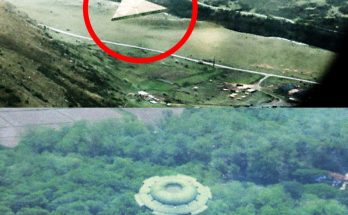

Imagine a tranquil village in the heart of Zhejiang Province, China, where time seems frozen, and life moves to the rhythm of ancient traditions. Shiyan Beicun, untouched by modernity, is a place where villagers tend their fields and share stories beneath ancient trees. Yet, beneath this serene facade lies a secret that would rewrite history. In the scorching summer of 1992, a mystery surfaced from the earth. Scattered ponds across the landscape held water that defied the relentless sun, never drying up despite prolonged droughts. These were no ordinary ponds—they were portals to a forgotten realm.

Driven by curiosity, a villager named Wu Anai rallied his neighbors to investigate. For 17 grueling days, they pumped water from one pond, revealing a colossal hand-carved cavern. Its smooth walls, adorned with precise chisel marks, echoed a forgotten past. This was just the beginning. Further exploration uncovered 24 subterranean chambers beneath the village—a hidden city lost to time. The Longyou Caves, as they came to be known, spanned vast chambers, some reaching 30 meters high, rivaling the grandeur of cathedrals. Over 1 million cubic meters of rock had been meticulously removed, a feat comparable to half the stone used for the Great Pyramid of Giza. Who built these caves, and why? No historical records or artifacts provide answers, leaving researchers to ponder their purpose—storage, shelter, or perhaps sacred spaces?
The mystery deepens with the caves’ engineering. The uniform chisel marks and structural integrity suggest advanced techniques, yet no ancient texts mention the site. Theories range from flood prevention systems linked to the nearby Qu River to elaborate tombs or ceremonial spaces. The caves’ silence challenges our understanding of ancient Chinese ingenuity, leaving us to wonder what other secrets lie buried.
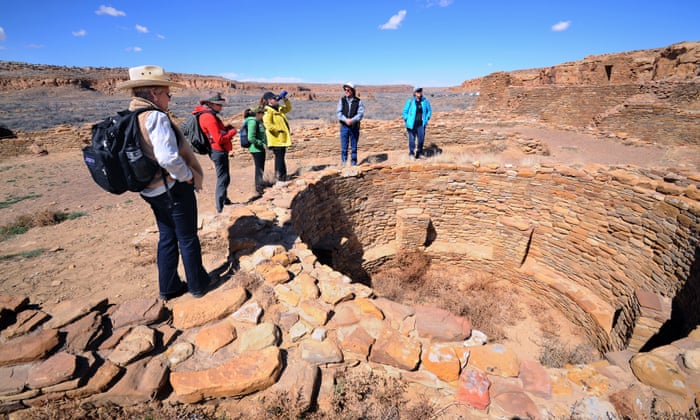
Across the globe, similar enigmas emerge. In Malta, the Hal Saflieni Hypogeum, discovered in 1902, is a subterranean masterpiece carved between 4000 and 2500 BCE. This labyrinth of chambers, hewn from limestone with primitive tools, descends three levels and holds the remains of over 7,000 individuals. Its Oracle Chamber amplifies sound at 110 Hz, possibly inducing meditative states. Was it a necropolis, a temple, or a site for acoustic rituals? The sleeping lady figurine found within hints at spiritual significance, yet its purpose remains elusive.
In Japan’s Tochigi Prefecture, the Oya Stone Quarry, uncovered in 1919, stretches over 20,000 square meters, its soaring chambers carved from volcanic ashstone. The precision of its smooth walls raises questions about the tools and techniques of its creators. Was it merely a quarry, or did it serve astronomical or spiritual purposes? Nearby, the Miyaani Quarry in Kanai reveals massive stone blocks, some weighing over 500 tons, abandoned as if work ceased abruptly. How did ancient workers move such megaliths without modern machinery?
In China’s Yanqing District, the Guyaju Caves, discovered in 1984, comprise 117 caves with 350 chambers carved into granite cliffs. Spanning 24.7 acres, this complex features dwellings with doorways, windows, and drainage systems, suggesting long-term habitation. Yet, no artifacts or records explain its origins. Theories propose it as a Tang Dynasty granary, a Han Dynasty garrison, or a Liao Dynasty refuge, but the absence of evidence fuels speculation.
From India’s Barabar Caves, carved in the 3rd century BCE with mirror-smooth surfaces and remarkable acoustics, to the Bimbetka rock shelters, adorned with 10,000-year-old paintings, these sites challenge our perceptions of ancient capabilities. The Lascaux Cave in France, discovered in 1940, showcases vibrant 17,000-year-old animal paintings, while Indonesia’s Leang Temuseng Cave holds a 40,000-year-old hand stencil, hinting at early symbolic expression. Each discovery reveals a world where ancient peoples wielded sophisticated knowledge of engineering, art, and perhaps even sound.
These caves and quarries, scattered across continents, share striking similarities—precision, scale, and mystery. Were they isolated achievements, or evidence of a connected ancient world? As we uncover these hidden realms, we are reminded that beneath our feet, the past holds secrets that continue to reshape our understanding of human potential.