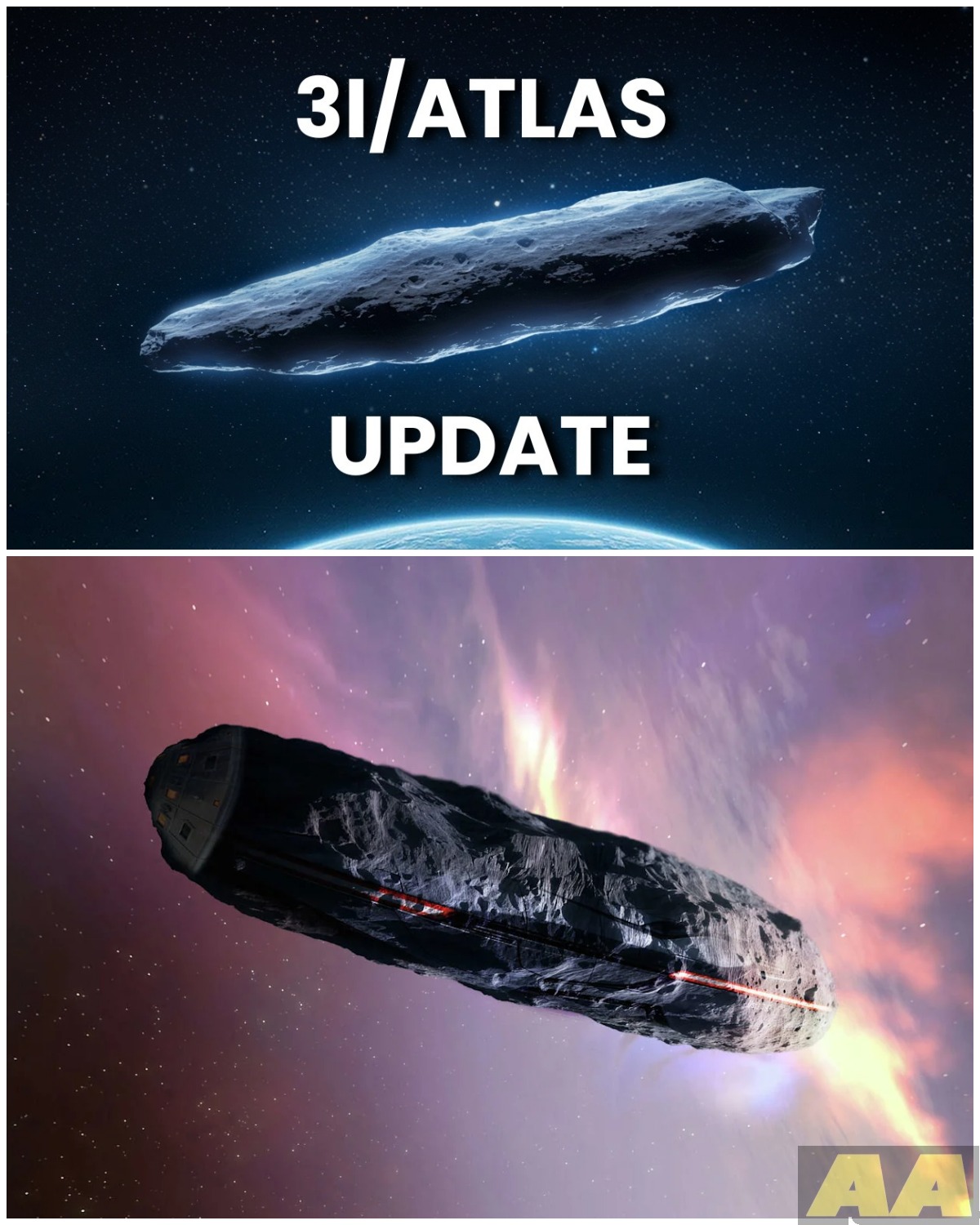
Most will never come anywhere near Earth.
But every so often, one crosses our path.
When that happens, astronomers get a rare opportunity to study material formed around another star — something humanity has only witnessed a handful of times in history.
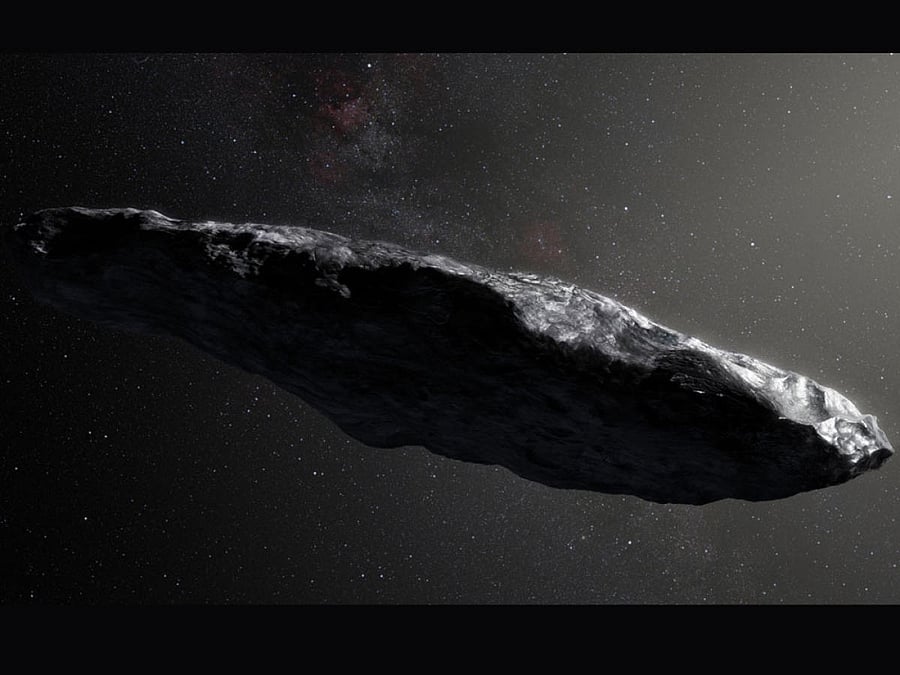
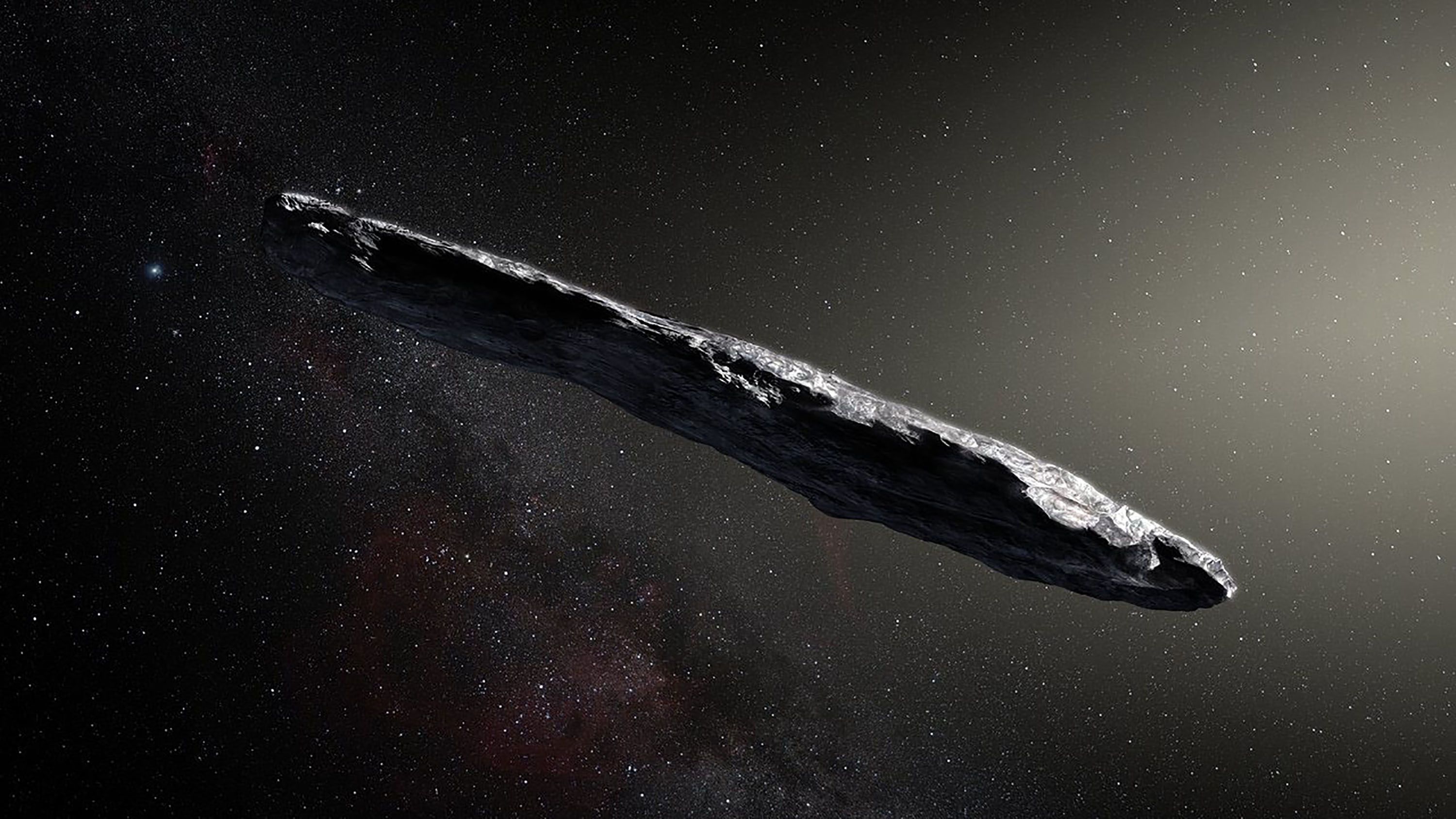
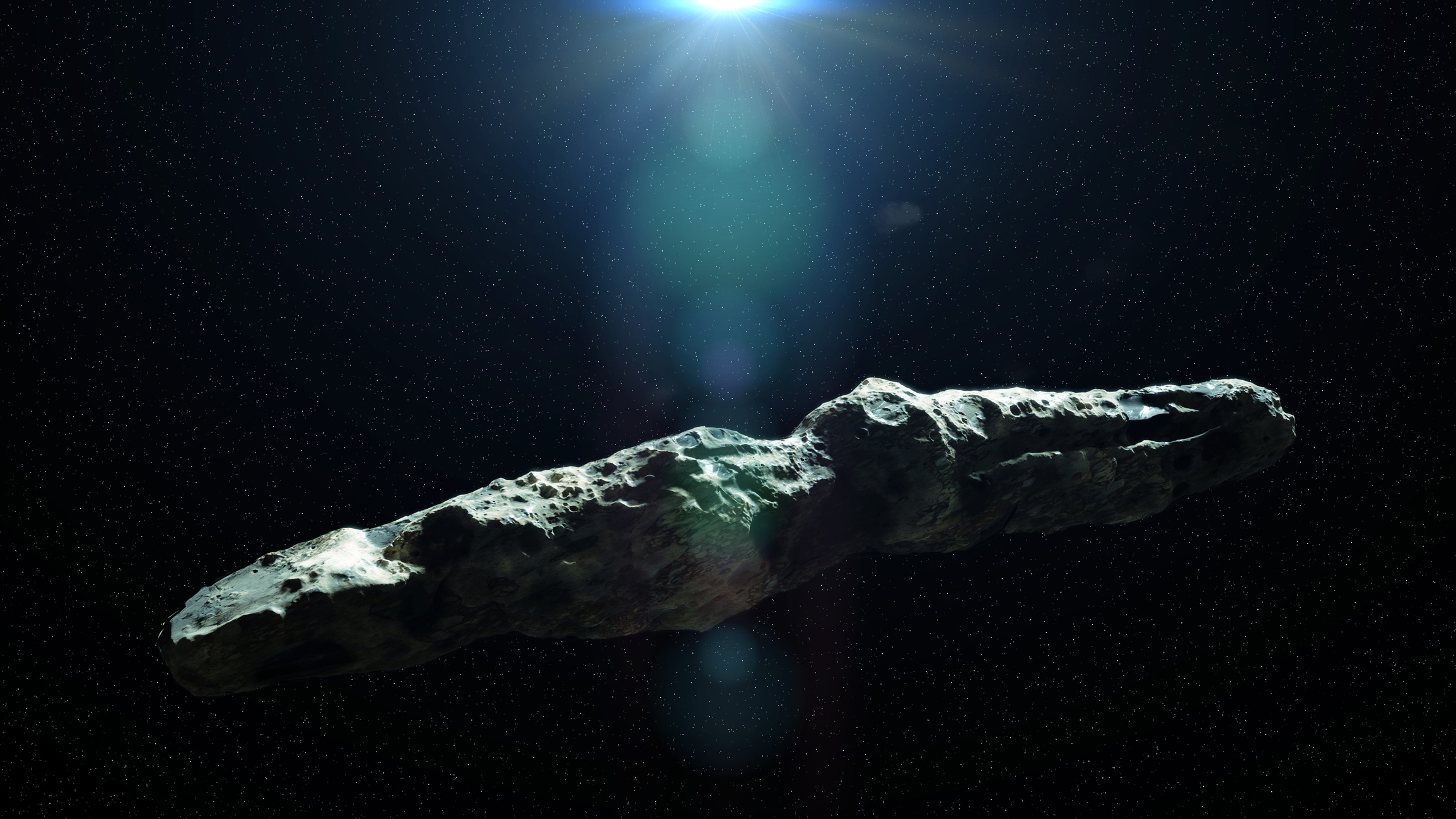
The first confirmed interstellar visitor, Oumuamua, stunned scientists in 2017 with its bizarre shape and unexplained acceleration. Then came Comet Borisov, a more familiar-looking comet that confirmed icy objects from distant star systems really could wander into ours.
Now, a third visitor has arrived.
And according to researchers, it may be the most unusual one yet.
The object is known as 3I/ATLAS, and almost immediately after its discovery, observatories around the world turned their attention toward it.
What they found raised far more questions than answers.
A Strange Discovery In Chile
The story began on July 1st, 2025.
At an observatory in Chile, part of the ATLAS Project detected a faint object moving unusually fast across the night sky.
ATLAS was originally designed to search for potentially dangerous asteroids that could threaten Earth. Every night, its telescopes scan the sky looking for tiny moving points of light.
Most of the time, those objects turn out to be ordinary asteroids or known comets.
This one did not.
The object was located roughly 4.5 astronomical units from the sun — around Jupiter’s distance — yet it was moving much faster than astronomers expected for something bound to the solar system.
Within hours, additional observatories in Hawaii, Arizona, and Chile began observing it.
The first images showed something important.
A faint glowing coma surrounded the object, along with the beginning of a tail.
That meant it was active.
This was not a simple asteroid.
It was a comet.
The Orbit That Changed Everything
Scientists quickly searched through archived telescope images hoping to find earlier accidental sightings of the object.
They succeeded.
Older observations from the Zwicky Transient Facility and previous ATLAS scans revealed the comet had already been quietly traveling through the solar system for weeks before anyone realized what it was.
Those earlier images allowed astronomers to reconstruct its orbit with much greater precision.
That is when things became extraordinary.
The object’s orbit was not elliptical like ordinary comets orbiting the sun.
It was hyperbolic.
Extremely hyperbolic.
Its orbital eccentricity measured around 6.1 — far beyond the threshold for objects gravitationally bound to the sun.
In simple terms, this comet was not circling our star.
It was passing through.
Its trajectory indicated a one-way journey from another stellar system entirely.
By July 2nd, the object officially received its new designation: 3I/ATLAS.
Humanity had discovered only its third confirmed interstellar object.
Faster Than Anything Before It
What truly shocked astronomers was the comet’s speed.
Its hyperbolic excess velocity — the speed it maintains even after escaping the sun’s gravity — measured roughly 58 kilometers per second.
That made it dramatically faster than both Oumuamua and Borisov.
As it approaches its closest point to the sun later in 2025, researchers estimate it could briefly reach nearly 68 kilometers per second relative to the sun.
No interstellar object ever observed has moved this quickly.
Scientists believe such extreme velocity likely reflects a chaotic history.
Over billions of years, the comet may have experienced countless gravitational interactions with stars, giant planets, gas clouds, or other massive objects drifting through the galaxy.
Every encounter could have altered its path slightly, eventually sending it hurtling into interstellar space.
And somehow, after all that time, it crossed ours.
The First Sign Something Was Different

One of the earliest clues that 3I/ATLAS was unlike ordinary comets came from an unexpected source.
TESS — NASA’s Transiting Exoplanet Survey Satellite — had unknowingly captured the object long before its official discovery.
The data revealed something unusual.
Even when the comet was more than 6 astronomical units from the sun — farther than Jupiter — it was already active.
That should not have been happening.
At such cold distances, water ice normally remains frozen solid.
Typical comet activity closer to the sun happens when water ice begins sublimating into gas.
But 3I/ATLAS was active much farther out.
That suggested something more volatile was driving the activity instead.
Researchers suspect carbon monoxide and carbon dioxide ice may be responsible since those materials vaporize at far lower temperatures.
That discovery hinted the comet may have formed under conditions very different from those found in our own solar system.
Telescopes Around The World Join The Hunt
As news spread, some of the world’s most advanced observatories turned toward the object.
On July 2nd, the Canada-France-Hawaii Telescope confirmed the existence of a faint coma surrounding the comet.
Then, on July 4th, the Very Large Telescope in Chile captured detailed observations that revealed even more surprises.
Using spectroscopy, astronomers detected traces of atomic nickel and cyanide gas in the comet’s coma.
Those chemicals are also found in comets from our solar system.
That mattered because it suggested some comet-building ingredients may be common across planetary systems throughout the galaxy.
Despite forming around entirely different stars, comets may still share similar chemical foundations.
But other observations hinted 3I/ATLAS was still highly unusual.
The Color-Changing Comet
As the comet moved closer to the inner solar system, astronomers noticed apparent changes in its color.
Some of the variations likely came from different telescope filters and observing methods.
But not all of them.
Data from the Gemini North Telescope revealed major increases in gas emissions, especially cyanide and nickel.
The comet’s coma appeared increasingly dynamic and unstable.
Researchers also observed substantial dust production, indicating the object was actively shedding material as sunlight heated its surface.
Then came observations from Hubble Space Telescope.
Hubble provided the clearest images yet of the comet and revealed three major discoveries.
First, scientists estimated the object’s nucleus could measure less than one kilometer across, though it might possibly reach over five kilometers in diameter.
Second, Hubble detected visible plumes of dust erupting from the comet’s surface.
And third, researchers realized this object was likely far larger and more massive than either Oumuamua or Borisov.
Estimates suggested 3I/ATLAS could weigh tens of billions of tons.
The Discovery That Truly Shocked Scientists
The biggest surprise arrived when the James Webb Space Telescope observed the comet in August 2025.
At that point, the comet had approached roughly 3 astronomical units from the sun.
Normally, water vapor dominates comet activity at that distance.
But Webb detected something completely unexpected.
The comet contained enormous amounts of carbon dioxide.
Far more than water.
Researchers calculated a carbon dioxide-to-water ratio around 8:1 — roughly sixteen times higher than typical solar system comets.
That finding suggested 3I/ATLAS may have formed in an entirely different type of planetary environment.
Scientists proposed several possibilities.
Perhaps the comet formed in a star system where water vapor was stripped away early, leaving carbon dioxide-rich outer regions behind.
Or maybe the comet passed dangerously close to another star long ago, losing much of its surface water ice during the encounter.
Either way, its chemistry looked alien compared to anything commonly observed in our solar system.
A Visitor Older Than The Sun
Researchers then attempted to answer the biggest question of all.
Where did it come from?
To investigate, astronomers used data from Gaia, which has mapped over a billion stars throughout the Milky Way.
By tracing the comet’s motion backward through space, scientists reconstructed millions of years of its past trajectory.
They identified dozens of stars the object may have passed near.
But none appeared responsible for ejecting it toward our solar system.
Instead, the analysis pointed somewhere much farther away.
The region between the Milky Way’s thin and thick galactic disks.
That area contains some of the galaxy’s oldest stars.
If the calculations are correct, 3I/ATLAS could be more than 10 billion years old.
Twice the age of the sun itself.
That possibility transformed the comet from a scientific curiosity into something much more significant.
A time capsule.
A surviving fragment from the early Milky Way.
What 3I/ATLAS Might Be Telling Us
Interstellar objects remain incredibly difficult to study because they appear suddenly and disappear quickly.
By the time astronomers mobilize telescopes around the world, the object is often already racing away again.
But each one teaches scientists something new.
Oumuamua challenged assumptions about shape and motion.
Borisov confirmed alien comet chemistry existed.
Now, 3I/ATLAS may be revealing how diverse planetary systems throughout the galaxy truly are.
Its unusual chemistry, extreme speed, ancient age, and strange activity suggest our solar system may not be as typical as humanity once believed.
And perhaps most importantly, it hints that countless unseen objects are already drifting silently between the stars right now.
Most will never be detected.
But occasionally, one enters our cosmic neighborhood long enough to remind us just how vast — and mysterious — the galaxy really is.