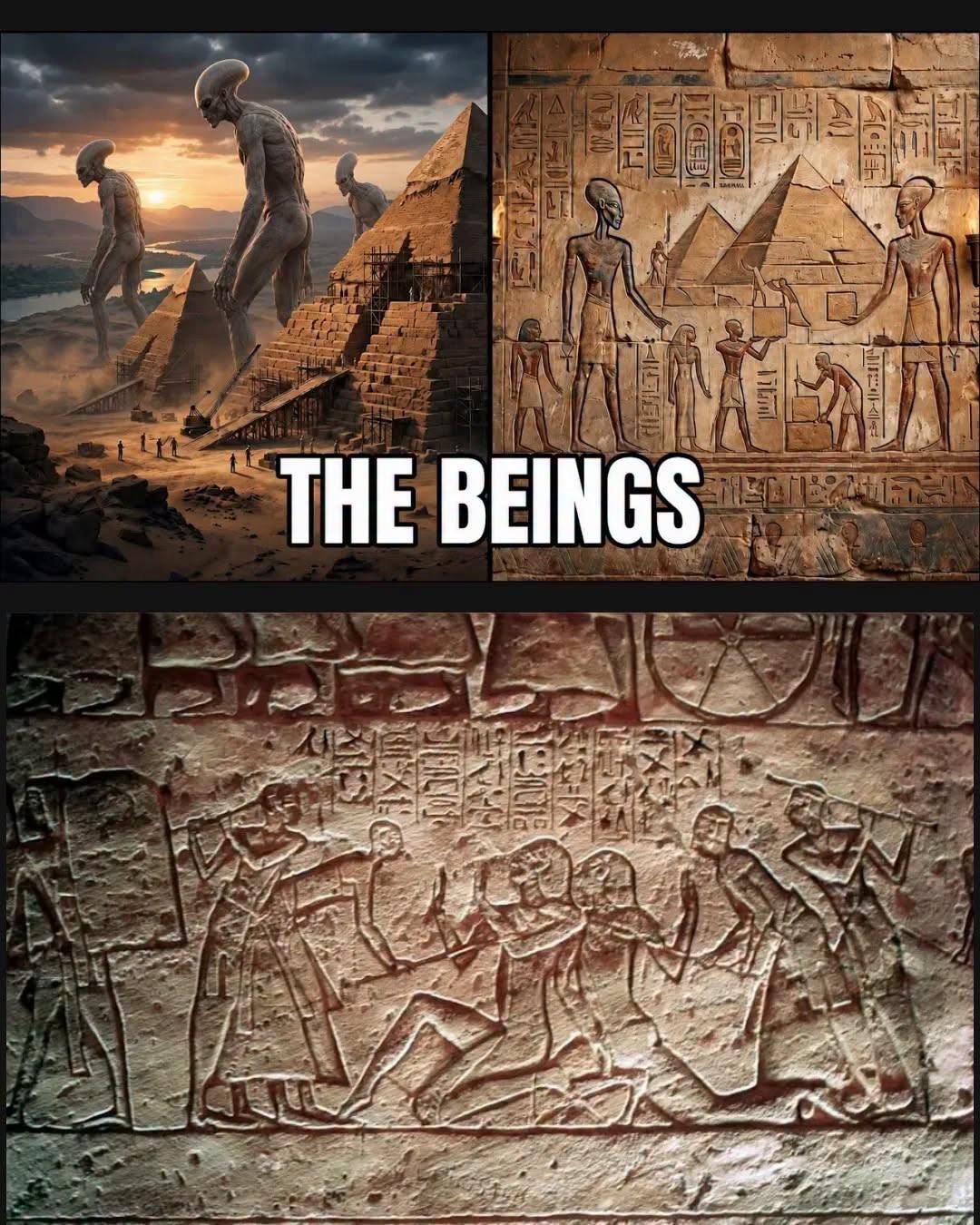
The ocean had a king 190 million years ago, and that creature was just the size of a dolphin, but it still kept everyone else in fear. A fossil collector found its relics in the rock at England’s famous Jurassic Coast near a place called Golden Cap in Dorset back in 2001. For centuries before that day, people just walked over it and never noticed this treasure. Then, it traveled all the way to a museum in Ontario, Canada, but it was still there until in late 2025, scientists realized they weren’t looking at just another sea reptile, but at something unique, the only known specimen of its species. The find received a nickname, the sword dragon of Dorset, and got the attention of the scientific world. Ichthyosaurus, the group this animal belongs to, spent their lives in the ocean, but they don’t have much in common with fish.
Think of them as the marine equivalent of dinosaurs’ cousins. For millions of years, they ruled the seas the way sharks and whales dominate today, but the sword dragon didn’t have much in common with those bad guys. This creature stretched just about 10 ft long and had a pretty unusual appearance. Many ichthyosaurs had thick skulls and strong jaws, which were just perfect for crushing prey. Instead, evolution gave our guy an incredibly long, narrow snout attached to a high-speed body. Researchers think it used that snout to slash through schools of fish and squid and to stun or slice prey before swallowing it. And the eyes of our sword dragon worked like giant camera lenses. They pulled in every bit of light available, so the animal could see in places where most predators would be almost blind.
And in the ocean, where sunlight doesn’t travel very far underwater, it’s a huge advantage. Fish, squid, and other prey drifted through the gloom thinking they had some cover from danger, and our dragon could spot them without a problem. It also had a pretty unusual skull. Most animals, including us humans, have a small bone near the nostril area called the lacrimal bone. Normally, it’s nothing special, but on the sword dragon, it had odd little prong-like projections sticking out from it. Something paleontologists had never seen on any other ichthyosaur before. In paleontology, those tiny details are everything. They become clues that tell scientists they’re not looking at a completely new species that lived millions of years ago. The sword dragon skeleton survived in almost perfect shape and preserved its three-dimensional form, not flattened like many other fossils.

Scientists even think traces of the creature’s last meal still sit inside its remains. So, one moment this animal hunted fish in Jurassic waters, and the next moment it froze in time with its final lunch locked inside stone for 190 million years. The story got even more interesting once scientists began studying the bones carefully. Some limb bones and teeth have strange deformities, which means the animal suffered injuries or disease while it lived. The skull also has bite marks from a much larger predator, probably another ichthyosaur. That beast likely delivered the final blow. But, the biggest reason scientists care about this animal so much is that it fills a massive gap in the fossil record. Fossils from the time period when it lived, around 193 to 184 million years ago, show up very rarely.
Before this discovery, paleontologists saw two completely different groups of ichthyosaurs in the fossil record. Older ones before this period and newer ones after it. But no one knew exactly when or how that change happened. So, the sword dragon enters the story like a missing puzzle piece. This creature looked more closely related to later species that appeared millions of years afterward. That means the big evolutionary shift in ichthyosaurs likely started earlier than scientists thought. Now, let’s leave the ocean and jump to a completely different landscape. One that once baked under the brutal sun of the Sahara. Around 95 million years ago, a predator walked there that looked just as strange as the sword dragon, but it chased prey on land and in rivers instead of the sea. The scientist who led the discovery described this animal as a hell heron.
It stretched as long as a school bus and weighed several tons. Its skull had long crocodile-like jaws filled with conical teeth, so it could easily grip slippery fish for lunch. But the really weird part was a crest on its head shaped like a curved blade, a scimitar. It looked so unusual that scientists didn’t even recognize the species when they first uncovered the bones in 2019. They only understood what they had after they returned to the site in 2022 and collected more fossils. Researchers find spinosaurs in rocks that formed near ancient coastlines, which clearly shows us that those creatures took their food from the sea. But this one turned up hundreds of miles from any prehistoric sea. The land around it once had forests and rivers instead of desert dunes.
That means this giant predator probably went into freshwater ecosystems to look for food there instead of coastal waters. So, it looks like this massive dinosaur was wading through water up to 6 and 1/2 ft deep, standing on sturdy legs while scanning the surface for fish. Instead of diving like a crocodile, it likely waited patiently and then snapped its jaws shut in a lightning-fast strike. More than 200 million years ago, another strange survivor swam through freshwater lakes and slow-moving rivers in what is now Zimbabwe. An extinct species of lungfish. Unlike most fish, lungfish can actually breathe air. They have organs that function like primitive lungs, which allows them to gulp oxygen directly from the atmosphere when water becomes too stagnant or low in oxygen. In a way, they live between two worlds, part fish, part early experiment in the transition toward land animals.
And that superpower makes lungfish really important to scientists. They are the closest living relatives to the ancient ancestors of all four-limbed animals. There used to be a gap in our knowledge of these creatures, but the new discovery helped fill it. Now, we know that many lungfish may be more closely related than they used to think. And scientists can now better understand how these creatures survived for hundreds of millions of years. In a way, lungfish are one of evolution’s masterpieces. This ancient blueprint kept working when entire worlds of species were born and vanished around them. Now, let’s travel even further back in time, way before dinosaurs ruled the planet. Around 275 million years ago, another bizarre creature swam through freshwater lakes in what is now Brazil. Researchers discovered the species from nine fossilized lower jaws, each about 6 in long.
Instead of pointing upward like normal teeth, this creature’s teeth stuck out sideways. Every single jaw had the same strange design, which proved the twist wasn’t a mistake, but the way the animal evolved. The inside surface of the jaw had tiny tooth-like bumps called denticles. These structures formed a grinding surface, so the creature had its own built-in food processor. Scientists think it used that unusual mouth to chew small invertebrates or maybe even plant material. That’s a pretty unusual diet for an animal whose close relatives were mostly carnivores. And speaking of its family, this bizarre creature belonged to an extremely ancient lineage called stem tetrapods. Those were early four-limbed vertebrates that gave rise to modern reptiles, birds, mammals, and amphibians. By the time Tonkya lived, most of those early lineages had already disappeared. Yet, this one somehow survived, and newer, more modern animals evolved around it.

Scientists call this kind of animal a living fossil. When researchers analyzed the fossils, they made the conclusion that this mysterious creature grew up to about 3 ft long and probably resembled a salamander with a longer snout. It swam through lakes in a world where the continents still formed the giant supercontinent Gondwana. This discovery is also important because it helps scientists understand how ancient ecosystems functioned and which animals filled different roles in those early communities. Hey there, curious history buffs. Have you heard the legend of the ancient race of giants of Nevada? Yes, I’m talking about actual giants that allegedly lived thousands of years ago. Now, I know what you’re thinking. Giants, really? Well, archaeological finds add fuel to this debate, too. And here’s where it gets interesting.
Lovelock Cave was indeed used as a burial site, and some of the remains found there are much larger than average human bones. The cave is by the Humboldt Sink in western Nevada. It was once part of an enormous lake which eventually dried up leaving a number of smaller ones including the Humboldt Sink. The cave became the home of the Si-Te-Ca tribe. According to the legend, these red-haired giants were so big that they had to be buried in the cave itself. Indeed, later on archaeologists discovered 8 to 10-ft tall skeletons. This legend started to unfold when a mining engineer named John T. Reid talked to the locals in 1886. Once Reid saw the cave, he knew he was onto something. The news spread soon, but the cave was attracting another type of attention too. The deposits of a fertilizer known as guano were discovered inside the cave.
So, a mining company began excavating the precious resource in 1911 and soon shipped more than 250 tons of the fertilizer to San Francisco. Unfortunately, some of the human remains and artifacts were neglected and lost in the mining process. This led to an official excavation in 1912 and 1924. After the top layer of guano had been mined, strange objects started to surface. Around the area, the earliest evidence of human habitation dates back about 4,000 years. The Lovelock culture lasted for some 3,000 years and they left us with 10,000 stunning artifacts. The pits in the cave were like a series of time capsules hidden at different depths. Archaeologists determined the age of each pit by its depth.
It turns out that many different groups used the cave for storage over a really long time and the things they stored there give us a really cool glimpse into their cultures. It’s like a giant ancient storage unit full of hidden treasures. What have the researchers found besides the giant bones, you might ask? Some other bodies were mummified using a method similar to the one applied by ancient Egyptians. These remains also had something in common with the bodies discovered as far south as Lake Titicaca. Both mummies had some red hair. Yet, there are scientists who believe this reddish hue is the result of the interaction with the environment in which the bodies stayed. So, while the story of the red-haired giants may be a wild and intriguing tale, not everyone is convinced.

Some experts believe that the bones found in Lovelock Cave are simply the remains of prehistoric animals like mammoths or sloths. But others insist that there’s something more to the story. Other relics, such as finely crafted baskets and exquisite duck decoys made from tule fibers, were also found there. In any case, this cave is worth the attention it gets. By the way, you can still visit this cave today and see the pits of different depths with your own eyes. But let me tell you one thing, it’s in a hot, dry, and isolated place. Archaeologists have made another discovery that seems to be straight out of a legend. They think they found the palace of the one and only Odysseus, who was the legendary Greek king of Ithaca and the hero of Homer’s epic poem.
Move over, Indiana Jones, we’ve got some real-life adventure happening here from around 1300 BCE. Apparently, this is the only palace mentioned in Homer’s epic poems that hasn’t been found. The excavations have been made on the Ionian Islands, and the view from the ruins found on the island of Ithaca are exactly as described in the Odyssey, says the professor who led the excavation team. Known to the ancient Romans as Ulysses, the Greek hero took 10 years to return home to Ithaca after the fall of Troy. For many years, Homer’s other epic called the Iliad, which tells the story of the protracted siege of Troy by the Greeks, was regarded as a myth, too. But then, in the 1870s, Troy was rediscovered in modern-day Turkey’s Çanakkale city. So, if they found Troy, who’s to say they couldn’t find Odysseus’s home?
The researchers were following Homer’s words as a road map. The excavation site has a building complex with two levels. It has important finds such as storerooms and workshops, a complicated drainage system, and fragments of pottery. It also has a well from the 8th century BCE, which is around the time when Odysseus is believed to have been the king. Yet, not everyone is convinced that the team has actually discovered the home of Odysseus. A British researcher named Robert Bittlestone insists that Homer’s description of ancient Ithaca isn’t very similar to the island that now has its name, and that Odysseus’s kingdom was actually on the isle of Cephalonia. However, Italian archaeologist Adamantios La Regina might have a more realistic approach to this debate. He says that whether this find has a connection to Ulysses or not, what’s more important is the discovery of this royal palace.
Once upon a time, in a land far away, the Klamath Indians spread a legend about the creation of Crater Lake. Okay, okay. Maybe this land is not that far away, and it still exists. You can find it in South Central Oregon in the western United States. Anyway, the legend has it that this lake was formed in a vicious battle between two volcanoes, Mount Mazama and Mount Shasta. Then, the spirits of Earth and the Sky, which are Llao, who ruled the below world, and Skell, the chief of the above world, joined the fight. It turned into a geological drama. During the battle, darkness veiled the land. The fight was over when Mount Mazama collapsed and sent Llao back into the underworld. Then, the rain filled the pit and created a lake in the place where the mountain had once stood. Flash forward to our time.
Scientists have discovered that Mount Mazama did erupt 7,700 years ago. Artifacts found in the area prove that the legend indeed contains some details about the explosion. The tale says that red-hot rocks were flying through the sky. This happened during the volcanic eruption that caused the mountain to collapse. This created the volcanic caldera, which later on got filled with water. What makes this legend-came-true story unusual is how long it has existed. According to researchers, these types of verbal stories lose their credibility within 600 to 700 years. That’s why the legend about the creation of Crater Lake is so unique. So many generations, for hundreds of years, have been accurately passing down the information. This volcanic crater lake is now in a national park. It’s famous for its deep blue color. The water in it is extremely clear.
If you visit it today, the water you’ll see won’t be the same as for someone who will visit the place 250 years later. Because there are no rivers flowing into or out of the lake. The existing water evaporates, and the lake gets filled again by rain and snowfall. Basically, every 250 years, the water is replaced. Plus, this lake is almost 2,000 ft deep, which makes it the deepest lake in the United States. Swimming is okay in the lake, but there’s only one legal and safe trail to get to the shore. There are other activities, such as fishing and boat tours. Shared human experiences, such as birth, marriage, and aging, may explain why certain tales are shared globally. Similar struggles and obstacles faced by humans around the world generate similar themes in traditional stories about love, parenting, and mortality.
So, do you have legends or tales you’ve heard of from your grandparents? Who knows? Maybe your ancestors, too, witnessed a cool historical event. You’re walking down the street. You see a strange-looking antique shop called Ageless Trinkets of Mr. Bright. You’re curious, so you enter there. You take a look at all the weird stuff. Suddenly, an old folded parchment paper catches your attention. It’s a world map, but something’s off with it. Instead of showing the countries as you know them, it shows the locations of four mythical lost worlds and civilizations. Mr. Bright, the shop owner, comes next to you after realizing your shock. “This map won’t let you find these places or anything, but I can explain to you the legends behind them if you want,” he says. Let me begin with Atlantis.
You might know it as Aquaman’s underwater kingdom, but Atlantis, the fictional island, was actually first introduced in two of Plato’s works. According to him, Atlantis was a highly advanced civilization that existed about 9,000 years before his own time, and its story had been passed down by poets, authors, and others. He wrote about Atlantis and its citizens to give a moral lesson and to teach about the dangers of arrogance, as well as the eventual downfall of those who are after too much power. In his dialogues, Plato stated that Atlantis was a great and powerful empire that was respected in all parts of the world. It was founded by beings who were half deities and half human and became a great naval power after a while. Being an island filled with gold, silver, and other precious metals certainly helped their case.
But besides that, it was also known for its breathtaking architecture and state-of-the-art technology, as well as its countless rare and exotic wild animals. Atlanteans were proud of their great achievements and the perfection of their civilization, but their excessive pride was going to bring their downfall. They believed they were so superior that they could gain control over any nation. This led them to launch a series of invasions. They conquered many of the Mediterranean lands, but when it was time to enter Athens, Athenians pushed back with an extraordinary force, so the Atlanteans were finally defeated. Plato stated that deities then got angry at Atlanteans because of how wicked, greedy, and immoral they became. So, they punished them by sending earthquakes, which caused Atlantis to sink beneath the sea.
Although the earliest written records of Atlantis were Plato’s works, some people still believed his story to be based on truth and tried to identify the island of Atlantis with actual countries. Some people suggested it may have been located in the Mediterranean Sea, near the coast of Spain or Italy. Others thought it may have been located in the Caribbean, off the coast of Central or South America. But, there was no solid evidence to support any of these claims. One theory in particular seemed more plausible than the others though. Located in the Aegean Sea, the island of Santorini was the home of a highly advanced Minoan society. However, due to a huge volcanic eruption, it was destroyed about 3,600 years ago, causing the Minoan civilization to suddenly disappear. These similarities between the fictional Atlanteans and the historical Minoans made Santorini a good candidate for the speculations.
Yet again, there were still major flaws with it, such as how the time when Plato said Atlantis was destroyed doesn’t coincide with the time of Santorini’s eruption. So, Atlantis still continues to be regarded as nothing more than a popular legend in the scientific world. “Now, let’s move toward the northeast direction on the map. ” Mr. Bright says. According to Celtic Breton mythology, there once was a magnificent city called Ys, also known as Ker-Ys, that towered over Douarnenez Bay in France’s Brittany region. It was the most wealthy city in the entire Atlantic. It was especially famous for its beautiful gardens and buildings, and its citizens were all living comfortably and happily there. Dahut, who was King Gradlon’s daughter in Breton legends and literature, had a deep love for the sea.
She begged her father to build a city at the edge of the sea, and that is how the city of Ys was established. Little did she know that she would be the one responsible for the destruction of her father’s beloved gift. You see, since the city was surrounded by the sea, it needed to be protected by a dyke equipped with floodgates, and these gates could only be opened at low tide. And the only one who had the keys to these gates was the king himself. One day, a handsome red knight arrived at the city, but couldn’t pass the gates. Dahut was so taken by him that she wanted to let him in. She knew that her father was the keeper of the only key to the city. So, she sneaked into his room and stole it from him.
Then she gave it to the red knight so that he could enter the city and they could be together. However, the red knight turned out to be the prince of darkness, and he intentionally left the gate open to the raging sea. The waves soon swallowed all of Ys. King Gradlon was able to escape on his magical horse, but Dahut didn’t. She turned into an evil mermaid who lured sailors into the sea. Today, if you go to Quimper, a city in Brittany, northwest France, you can find the statue of King Gradlon riding on his horse. Although the city of Ys is a legend, Brittany coast locals believe that on the days when the waters are calm, you can still hear the tolls of the city bells deep under the sea if you listen carefully. Mr.
Bright then points at the Indian Ocean on the map and says, “Now, have you heard about Lemuria? ” Back in the mid-1800s, a few scientists suggested that there was once a continent that existed in the Indian Ocean, somewhere close to the south of modern-day Sri Lanka. The first one to popularize this theory was the British lawyer and zoologist Philip Lutley Sclater. In his paper, The Mammals of Madagascar, he stated that he found lemur fossils in India and not in Africa. However, this discovery was extremely shocking to him because of the fact that lemurs original homeland, Madagascar, is much closer to Africa. He proposed that this was possible only if some larger continent connected the two once. He stated that this continent must have eventually sunk to the ocean floor. He then named it Lemuria and hence the theory was born.
People who came after Sclater took his theory a step further and thought that Lemuria was also the home of an extinct race of humans called Lemurians who had four arms and enormous bodies and were also the ancestors of modern-day humans as well as lemurs. Of course, as new scientific discoveries were made on plate tectonics, evolution, and the study of DNA, the theories regarding the fictional continent called Lemuria were debunked. The last fictional land on the map is Agartha, Mr. Bright says. Taking its roots from Eastern mysticism, one legend says there’s a kingdom called Agartha that is located deep beneath the surface of the Earth. It’s where all four corners of the world are connected by paths and tunnels.
It is said that there’s a secret entrance into Agartha hidden in the Gobi Desert and it’s built by Agarthans themselves using advanced technology that can’t be detected by us, the surface folks. According to some beliefs, Agartha exists to counterbalance the energies of those who live above the surface. While we live in a state of rush and heightened emotions, this world beneath us is the total opposite. Some even say that those who who Atlantis fled here to continue their lives inside the Earth’s core. And yet, others think it’s actually a land that’s crawling with all kinds of monsters. But there’s no need to be scared since modern science proved Earth’s core is not actually hollow and is a solid hot iron ball. So, you can cancel your journey plans to the center of the Earth if you’ve made any. Thanks, Mr. Bright.
Now, you wouldn’t call this island mystical unless there were tales of giants living here. The island of Gozo in Malta is the backdrop of an ancient legend. Malta is an island country located in the Mediterranean Sea, just south of Europe. It’s a very strategically located archipelago. Throughout history, it was ruled by many different societies, such as the Phoenicians, Greeks, Romans, and Carthaginians. One cold night, thousands of years ago, a farmer noticed the sky turn orange, then red, when he heard a loud thump. Although the ground seemed to be moving, this wasn’t an earthquake. When he looked toward the woods, he saw a giant silhouette, taller than the trees. As he fearfully approached, he realized it was a woman, a giant woman. She introduced herself as Sansuna. Unlike the terrible giants of many tales, Sansuna didn’t want to exterminate the human race. Ooh.
She was loving and caring. She told the farmer that she and her people could help protect their land from invaders. The locals were pretty interested in this offer. Since Malta is located in an important commercial route, it was constantly being invaded. The story says that Sansuna settled in Malta and sooner rather than later, she was moving things around. And when I say things, I mean monoliths. Sansuna carried huge stones on her shoulder to build a magnificent temple called Gigantea, which means place of giants. She even did this while holding her half-giant, half-human kid on the other shoulder. Some say Sansuna lived exclusively on beans and honey, although others replace honey with water. The funniest bit here is that Malta is the 10th smallest country in the world, but it somehow managed to host giants. Hey, go figure.
The temple looked like a giant game of Tetris with some stones weighing as much as 20 elephants. Some of these monolithic rocks are so heavy, scholars guess it would take 50 men working together to lift just one stone. Now, as much as this is entertaining, humans never proved giants were real, so this story couldn’t be true. There’s a brief mention of a species of giants called the Nephilim in some ancient text. The Nephilims would have been terrible giants that wreaked havoc on the earth and only survived until the great flood, but nobody ever found real proof of this species really existing on earth until this came along. The world of Maltese archaeology unearthed quite a few shocking things in the past years. One of them are known as the Hypogeum skulls.
Hypogeum is the Greek word for underground, and this incredible site was discovered in the first decade of the 20th century. Back then, Malta’s National Museum director received an important phone call. Someone had accidentally dug some impressive bones and asked him to come check it out. The Hypogeum looked like an underground city filled with mazes and rooms that stretched along multiple floors. They were all made with similar limestones as the Maltese temples above ground. The Hypogeum was filled with important relics and artifacts. Scientists quickly understood that the Hypogeum was built as a type of final resting place for locals. So, along with skulls, they found a lot of bones and skeletons. One of these artifacts were skulls, but these weren’t regular human skulls. Rather, they were of the elongated type. To make matters worse, these skulls were hidden from the public for years.
People started to talk and created a bunch of theories behind it. The truth is that this discovery was a turning point for Maltese archaeology, although scientists didn’t know what to do with it. Some wondered if these skulls were natural or manipulated, since they knew some cultures in the world used head binds to alter their skulls. Other scientists threw in the hypothesis of little gray people or even the legendary giants. Some say that the elongated skulls could have been sculptures that worshipped otherworldly deities. There was no way to confirm any of these theories. So, the question remained, who were the builders of Malta’s megalithic temples? Now, let’s take a look at what scientists know. The Maltese megalithic temples have been standing strong since 3,500 BCE, which is even older than the pyramids of Egypt.
The main dilemma here is that these temples were built even before we invented writing. Yet, they required advanced technological skills to exist. The Ġgantija Temple seems too absurd to have been built by humans. The South Temple has a corridor with four oval rooms on the sides, looking like a big shamrock leaf. In one of these rooms, scientists found altars decorated with spiral patterns. It looked like an altar of some sort, indicating early Maltese people used them for ritualistic purposes. The North Temple is similar, but smaller, with a very low entrance that makes people crouch down to get inside. You get it? You need to bow down to their deities in order to get into this sacred place. I mean, one can’t help but wonder about the secret reasons these ancient builders had to build such a huge temple.

I’m thinking they probably cast one of Daenerys’ dragons to move the monoliths around. Yeah, I’m joking here. But hey, remember the entrance to King’s Landing? Yep. The series used the Mdina Gates in Malta as the exterior of King’s Landing during episode 3 of season 1. Anyways, back to the giants. The ritualistic theory of the whole thing won a few points when archaeologists uncovered these mysterious figures. They’re popularly known as fat ladies. These tiny statues have round bodies and faces that show how much they enjoyed life. They kind of look like a miniature Sansana, the giantess we talked about. Scientists believe these were statues that celebrated well-being and prosperity. It does prove that the people of the time had advanced craftsmanship skills, and they were pretty intentional with their constructions and art manifestations. One of these statues is known as the sleeping lady.
This Neolithic piece of art depicts the figure of a large woman lying on her side sleeping. After studying it deeper, scientists guessed this statue was meant to represent the Great Reaper. It was found in the Hypogeum, which we now know was a huge resting place. This specific statue is different from all the other fat ladies, starting with the hair and the embroidered skirt. Then there’s this statue. This is supposed to represent an 8-ft tall woman and the rim of her skirt. She was discovered in the most unusual of ways. A farmer was trying to plow his field, but he kept hitting large blocks of stone. All the way back in 1915, the farmer called Malta’s National Museum director and asked him to come check it out. Some think this is all the proof you need to confirm that Sansana was real. Others aren’t all that sure.
But that’s not all. The place where this giant statue was buried revealed one of Malta’s most impressive archaeological sites, the Tarxien Temples. The temples were made from limestone blocks. Some are 20 ft tall and weigh around 20 tons. Zammit, the museum director, kept digging and discovered multiple sites made of megalithic stones. All of them supposedly built by Stone Age farmers, all stranded on a remote island in the Mediterranean Sea thousands of years ago. It just doesn’t make sense. I mean, look at these temples in Mnajdra. This is probably the world’s earliest calendar. On the equinoxes, the sun passes directly through the main doorway, straight down the central axis. On the solstices, there are two superb variations. During the summer solstice, the rays fall on the edge of the megalith to the left of the doorway.
And during the winter, the rays fall to the right side of the doorway. It’s astronomical precision at its finest. And what about the structures in the Ħal Tarxien that we’ve already talked about? This complex is the oldest one in all of Malta. It was built with the purpose of doing animal offerings to deities. Scientists confirmed this by unearthing numerous animal bones buried in the soil. They also found a great collection of spirals, indicating that the locals also used this temple for ritualistic purposes. Overall, there are seven megalithic temples in Malta, each more impressive than the other. Scholars keep on digging to see if they can uncover the truth. Much like researchers do with the pyramids of Egypt, the lost Mayan cities in the Americas, and other sites. You know, scientists make discoveries that change the world, but even they can face mysteries.
Here are 10 things that have baffled scientists. Imagine that you constantly hear a low-frequency hum, and no one can trace its source. Roughly 4% of the world’s population hears the hum. It’s a geography-free sound. I mean, people all around the world hear it, so the name varies from Taos hum to Auckland hum, depending on the region where it gets generated. The sound is just on the threshold of human hearing. People hear it less when they’re outside, and it gets louder indoors, especially at night. What’s even scarier is that you cannot unhear it once you’ve heard it. Some folks say it started in London around the time of Charles Dickens, who wrote A Christmas Carol, and the low-frequency sound actually comes from the humbug. Or not. Actually, the earliest cases were recorded in Bristol, UK, dating back to the mid-1970s.
Scientists have various theories about where the hum comes from, and why only some people can hear it. Yet, they don’t have a clear answer. It could occur when ocean waves move along the ocean floor. They shake the earth when they collide with continental shelves. Or, this might be happening because of volcanic eruptions and earthquakes. Oh, and how about ultra-low frequency radio signals used to communicate with submarines, or even 5G? Hmm. Upsweep is another type of unidentified sound. It was discovered in 1991 in the Pacific Ocean. The sound is high enough to be recorded throughout the ocean. Scientists theorize that the sound could be related to underwater volcanic activity. Interestingly, the volume of the sound has been diminishing compared to its volume when it was first discovered. Yet, it still can be detected. Plus, it’s seasonal. It reaches its highest volume in spring and fall.
Is it related to seasonal changes? No one really knows for sure. The next mysterious thing is a cone-shaped monument found in the Sea of Galilee in Israel. This monument was discovered accidentally by sonar scanning in 2003, but the findings were published only in 2013. The monument weighs 60,000 tons. It was once submerged by rising waters. Archaeologists say the monument is enigmatic because they can’t figure out where it’s from. They don’t know what it’s connected to or its function. So, this big and unusual thing remains a mystery. Now, let’s move to Göbekli Tepe, Turkey. This place offers you one of the most archaeologically significant sites in the world. Why is it important? Well, it has massive carved stones about 11,000 years old. To put it in perspective, they’re 6,000 years older than Stonehenge.
Ancient people placed these stones before they began farming or crafting metal tools or pottery. So, the existence of this place goes against the chronology of civilization we’re familiar with, where people farmed first and built second. Apparently, it wasn’t like that. In any case, a good question is, what was the purpose of this site? Was it built to worship some spirits? Yep, archaeologists believe it might be the world’s oldest temple. Okay, say this with me. Paleodictyon nodosum. Yeah, I know it sounds like a chemical formula. This is a living fossil found deep down on the ocean floor. A creature makes these hexagonal burrows, that’s for sure. Yet, scientists can’t identify the artist. Now, what do I mean by living fossil? Well, Paleodictyon nodosum is a creature believed to produce a burrow nearly identical to Paleodictyon fossils. Is it a worm-like animal that made them? Scientists don’t know.
One thing is clear, this isn’t some random stuff created by geological forces. Now, speaking of fossils, take a look at this giant one. It’s informal name is Godzilla’s. It was discovered in 2011 by an amateur paleontologist. This is a scientist who studies the history of life on Earth by analyzing fossil records. Anyway, back to Godzilla’s. It’s almost 7 ft in length and 9 ft tall if you were to measure it upright. This fossil is 450 million years old, coming from the time when Cincinnati was underwater. It might be a fossilized algae mat, but some scientists have different opinions. This is a massive tunnel found in South America. The tunnel is at least 8,000 to 10,000 years old. At first, researchers discovered a couple of colossal burrows. They were enormous and neatly constructed. Geologists were amazed, saying they had never seen such structures before.
There’s no known geologic process to explain their formation. I mean, researchers have known about the burrows since the 1930s, but back then, they believed that these tunnels were just some sort of archaeological construction. Until they discovered huge claw marks on the walls and ceiling. They reasoned that some extinct species could be the ones to have left these marks. Many geologists strongly believe they found the burrows of giant ground sloths and armadillos. The structure is the largest known burrow from the Paleolithic Age in the Amazon. Yet, experts have many questions. How come such a deliberate-looking structure could form naturally? A researcher then discovered another strange cave. This one was hundreds of miles away from the massive tunnel. Fast forward, there are now more than 1,500 burrows from the Paleolithic Age found in Brazil.
What’s even more interesting is that some of these caves are connected to tunnels that sometimes lead to chambers. I’ll continue a natural phenomena. What if I told you that every year, especially in October, fireballs appear on the Mekong River in Thailand? According to legends, Naga fireballs are a call for Buddha to return to Earth. And river serpents are the ones making these calls. Well, that’s a myth. But what does science say about it? Is it related to a flammable gas? There are no clear answers yet. These fireballs appear to rise from the water. They can go as high as almost 990 ft. They’re like fireworks, disappearing rapidly. They typically glow with a reddish or orange color. I’ll mention some legends, too, because why not? They’re thrilling. And it would be a shame not to include the one about the lost city of Atlantis.
As you may know, the legend says that Atlantis submerged into the ocean around 11,000 years ago. Since then, not just scientists, but also treasure hunters and philosophers have been searching for the lost world. Could Bimini Road be a trace? In 1968, a diver found strange stones off the coast of North Bimini Island in the Bahamas. The stones look human-made. It’s like they were evenly spaced out and laid in an orderly row. It baffled scientists, but not for long. Carbon dating analysis of the blocks revealed that geological forces created the road naturally. There weren’t any tool marks or signs indicating that the blocks have been stacked or something. The research is continuing, but yeah, scientists generally believe that the rocks were created by erosion. Well, I guess the time of Atlantis hasn’t come yet. Okay, picture this.
You’re wandering on the beach and you see dozens of octopuses walking past. In 2017, a group of people from Wales witnessed exactly this. Why did these creatures come out of the ocean? No one knows the answer. The group reported that they had seen 20 to 30 octopi crawling on the sand. The people looked for some signs of injury, but found nothing. They said that they had carried the animals back to the ocean. Interestingly, these creatures kept crawling onto the shore when people were asleep. Experts say that it’s hard to be sure of the reason that pushed the animals to the beach without conducting a physical examination. They’re still speculating about the reason behind this unusual and rare occurrence. Could it be overcrowding? Furthermore, the octopi were well armed.
A separate study points out that the more fishers hunt large animals that feed on octopuses, the more the octopus population grows. Maybe that’s why these creatures have to go farther to find food or shelter. But, without proper research, these are only theories. There’s a lot we don’t know about space, too. So, here’s a bonus fact about the yellowish source of life in the solar system. Scientists have discovered a new type of wave inside the sun. These waves move in the opposite direction to the sun’s rotation. Plus, they move super fast. So fast that it’s beyond our understanding. Researchers have different theories about the function of the waves. If they figure out their role, this could give them additional insight into the processes happening inside the sun. And yes, the octopi were well armed. Have you heard of Gobekli Tepe?
It’s an ancient site in Turkey that literally made historians rewrite history books. Over 11,000 years ago, a group of prehistoric humans crafted an enigmatic masterpiece that’s even older than Stonehenge. Before its discovery, archaeologists believed that people didn’t know about iron and weren’t good at making pottery. They were sure that settled life only emerged with the need for agriculture. But Göbeklitepe changed this belief. The place has revealed that it was the temple that paved the way for a settled life, not agriculture. Until this discovery, researchers believed that farming was the catalyst for sedentary living. Meet Professor Schmidt, the guy whose findings changed this theory. He managed to prove that hunter-gatherer communities laid the very foundations of this way of life. Back in the 1960s, other archaeologists visited the area, but they totally missed the mark.
While surveying the region, they stumbled upon a hill with scattered limestone slabs and concluded it was just an old burial ground from medieval times. Little did they know that there was so much more to uncover. In 1994, Schmidt embarked on his own survey of prehistoric sites in the area. Surprise! He instantly realized he had discovered something truly extraordinary. Unlike the nearby flat and barren plateaus, Göbeklitepe had a gently rounded top rising 50 ft above the surrounding landscape. Funny enough, the translation of this place’s name is Potbelly Hill. Schmidt was sure only humans could have made something like this. Those broken limestone pieces that were mistaken for gravestones turned out to be way more exciting. It was like stumbling upon a hidden treasure. The pieces took on a whole new meaning, and Schmidt with his team was about to dive into the secrets waiting beneath the surface.
To their surprise, they found no traces of a settlement, no hearths for cooking, no houses, and none of those adorable clay figurines commonly found in nearby sites of similar age. However, they uncovered that those ancient people used tools like stone hammers. So, Schmidt and his team put their heads together and took a wild guess at the age of Göbekli Tepe’s stone structures. Their estimation got backed up by some limited carbon dating done right at the site. The ancient vibes of this place were finally starting to make sense. It was like a puzzle slowly coming together. You may think that back then people didn’t have special tools to create something as cool as Göbekli Tepe. Not true. Turns out, these prehistoric folks used flint tools instead of fancy metal chisels. They were also skilled at chipping away softer limestone and crafting pillars right on the spot.
Afterward, they carried the pillars a short distance to the summit and placed them upright. Once the stone rings were complete, they covered them with layers of dirt. Over time, they added new rings, and voila, you’ve got a cool hill to impress people in the future. During their first year of excavation, the team went through 15,000 pieces of animal bones from wild creatures. These people didn’t have pet animals or grow their own food. They hunted wild animals for their meals. But things were about to change because the place had everything they needed to start farming. Scientists say they had wild sheep and wild grains that could be domesticated. And guess what? Just 20 miles away, geneticists found evidence of the world’s oldest domesticated strains of wheat at a prehistoric village. These amazing findings have completely changed how we view civilization.
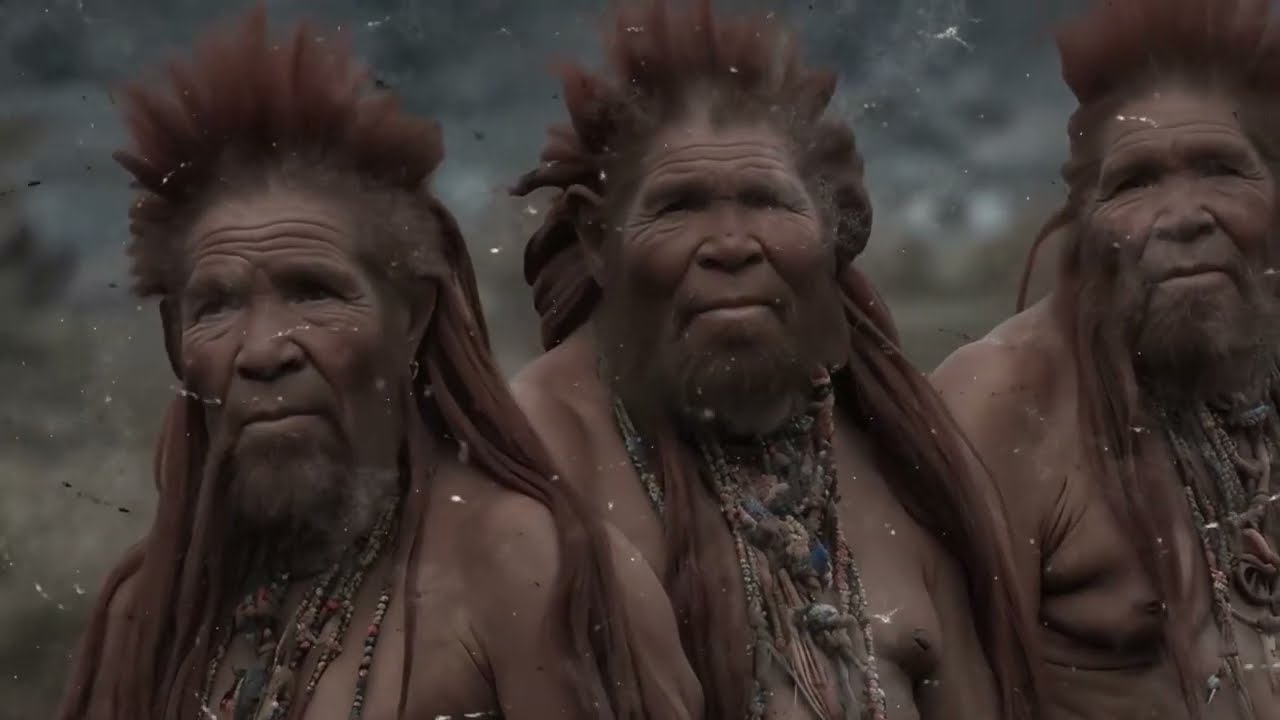
In the past, experts believed that people needed to learn how to farm and settle in one place before they could build temples and develop complex societies. But guess what? Schmidt’s research flips that idea on its head. He claims that the incredible effort put into constructing these astonishing structures actually set the stage for the development of advanced societies. It means that societal and cultural changes happened before agriculture. Schmidt has this fascinating hypothesis about Göbekli Tepe. He thinks it could have been a special burial site where people left their loved ones. And here’s the twist. The burial site was adorned with fancy statues and symbols representing deities from the spiritual realm. The idea that Göbekli Tepe could have served as a sacred place adds another layer of complexity to the whole story.
While the site’s true purpose may remain elusive, Schmidt’s insights invite us to consider the profound interplay between life and the afterlife and the deep reverence ancient hunter-gatherer societies may have had for their departed ancestors. Now let’s talk about the stars of the show, the mesmerizing T-shaped columns that dominate Göbekli Tepe. These mysterious structures range from 10 to 20 ft tall and most likely represent stylized human figures. But one figure stands out from the rest, the three-dimensional lion relief. This depiction really fires up our imagination. Why? Because it hints at the possibility that lions roamed Anatolia during the Neolithic period. These standing stones are arranged in circles and placed in rectangular pits. Each circle has a similar setup. Two big T-shaped pillars in the center surrounded by slightly smaller ones facing inward. Talk about a stylish arrangement.
These towering pillars reach a whopping 16 ft and weigh between 7 and 10 tons. Some pillars are plain and simple, while others are like works of art with intricate carvings. Foxes, scorpions, and vultures come to life crawling and twisting on the pillars’ sides. But, it’s not just animals depicted on these stones. Some pillars have abstract shapes representing humans and even small carvings of clothing items. Some of them even have belts. Now, there’s one pillar that stands out from the rest like a rock star. This super old stone pillar suggests that a comet crashed into Earth. It happened during a chilly period that lasted about a thousand years. Previous studies examining Greenland ice cores hinted at this comet theory. But, now the carvings at Göbekli Tepe prove it right. The carvings on the pillars are like a historical comic strip. They even show a headless human figure.
Researchers fed the images into a computer and discovered their connections to constellations, indicating that this temple might have been an ancient observatory. It’s like our ancestors were trying to document this cataclysmic event in their own unique way. Archaeologists have been excavating and researching Göbekli Tepe since the mid-1990s, peeling back layers of history and providing us with a deeper understanding of the intricate relationship between various elements. They have no plans to stop the whole process for another 150 years. Who knows what else they’ll find? You see, Göbekli Tepe has been labeled purely as a ritual site with no signs of domestic activities. We We led to believe that the absence of water meant it couldn’t support semi-sedentary communities. But scientists believe it’s time to shake things up and approach Göbeklitepe with fresh eyes.
It’s time to question what we believed before and use new evidence and different ways of thinking. Like, there might have been a group of people living in the area who didn’t stay in one place all the time. They moved around a bit but still had their own civilization living in the area semi-sedentarily. Göbeklitepe is not just home to a single temple, but an astounding collection of over 20 ancient structures. As archaeologists delve into the depths of this wonder, they are unraveling its unique layout featuring two prominent focal points at the heart of each establishment complemented by smaller structures and dividing walls. What’s even crazier is that in this area, there are over 200 obelisks, which are narrow tapering monuments. The unanswered mystery surrounding ancient civilizations have been a source of inspiration for many conspiracy theorists.
In fact, some of these mysteries are so interesting that many of us either already believe them or would like to. One thing is for sure though, none of those thousands of conspiracy theories have ever been hmm, what’s the word? Oh yeah, classified. Or have they? We’re all aware that the CIA has done some questionable things throughout history for the sake of national security, but you wouldn’t expect a book to be both a national and international threat. The CIA recently declassified parts of a book that talks about lost ancient civilizations and the catastrophic events that made them vanish thousands of years ago. This mysterious book was written in 1963 by a guy named Chan Thomas and it was going to be published by Emerson House in 1965 until the CIA got involved.
For some mysterious reason, they classified the book and it was never released to the public until recently. But here’s where it gets interesting. The book was declassified in 2013 due to the Freedom of Information Act, but it wasn’t released to the public until 2016. And what was released truly raises a few questions. The original version of this document was 284 pages long. But the PDF essay that was released was heavily censored with just 57 pages, which makes it 1/5 of the whole document. The pages were edited before they were released to the public in such a way that you wouldn’t even notice that the other pages were missing. Now, no one really knows why this book was classified in the first place, but it has some interesting content from what I’ve gathered.
The author of the book had quite the imagination and a huge love for ancient civilizations. And even though what he had to say is very thought-provoking, some of it is just bizarre. He believes that our planet is locked into a never-ending cycle of pole shifts and earth crust displacements that are responsible for the mass extinctions of many civilizations which existed more than 6,000 years ago, even before the Sumerians. He believed that these events caused more damage to the earth than meteors. And he bases this theory on a few artifacts that exist around the world, but weren’t really noticed until recently. But I’ll get into that in a bit. Those mass extinctions that the book talks about include the end of the ice age when huge 2-mi thick ice sheets disappeared from northern Europe, North America, and Canada and caused 100 species to go extinct.
And here’s how the author illustrates his hypothesis. He believes that there was a geomagnetic pole shift which caused catastrophic changes to both the atmosphere and the Earth’s crust, resulting in the extinction of many civilizations over time. Now, even though the geomagnetic pole shift is a real thing, it doesn’t just happen overnight. It happens really slowly, only about every few hundred thousand years, according to scientists. But, it’s a bit more complicated than it sounds. It is a well-known fact that the North Pole is somewhere above Alaska, and the South Pole is close to the middle of Antarctica. Now, these are the geographic poles, and they’ll always be north and south. However, the Earth’s magnetic poles flipped a few hundred thousand years ago. So, if you had a compass, let’s say 700,000 years ago, it would instead point south and show you the Antarctic.
But, the author of the book has a different theory. He believed that the flip of the north and south magnetic poles doesn’t happen every few hundred thousand years, but every 12,000 years. And that this flip occurs in just a few hours, causing a catastrophic apocalypse. He thinks this happens as a result of an explosion inside the Earth’s core. This explosion causes the magnetic poles to flip, but it also causes the Earth’s crust to move. According to the book, due to these catastrophic events, a lot of the Earth’s continents that were submerged under water rose above sea level in just a few hours. Now, here’s where it gets interesting.
The author also states that the Peruvian Andes were beneath the ocean before the last pole shift, and even though it seems far-fetched, since the Andes are approximately 22,000 ft above sea level, there was evidence to support that claim in the late ’80s. Scientists found whale bones and fossils that are said to be millions of years old on top of the Andes and the Himalayan mountains. It’s also suggested in the book that the deep freeze the earth went through during the Younger Dryas event caused the Gulf Stream to be disrupted. And he points to some interesting evidence to support that theory. Frozen mammoths were found trapped in blocks of ice with food still in their mouths. Now, this is a true mystery because freezing cold weather is in their nature, and they were among the few animals that could truly survive in the ice age.
So, what could have caused them to freeze so quickly? Kind of makes you go, “Hmm. ” doesn’t it? The document describes the Great Pyramid of Giza as a true enigma as well. The Pyramid of Giza is made out of 2 and 1/2 million stone blocks that are placed on top of each other with great precision. It’s close to 750 ft wide and more than 450 ft high. To this day, we’re still not able to explain how it was constructed, and it’s quite difficult to understand the internal design as well. On the inside, the pyramid has no similarities to the other pyramids, and despite popular belief, there were no mummies found in any of them. If you think that’s a bit weird, wait for the next one. There are absolutely no hieroglyphs found in any of the pyramids, and that goes both ways. What do I mean?
There are also no pyramids or anything that resembles a pyramid in any hieroglyphs, either. Mr. Thomas believes that the pyramids were created hundreds of thousands of years before the Egyptians by a civilization that went extinct. Speaking of civilizations, in his book, he even mentions the Greeks. He claims that in Greece, there was another ancient race of people that went extinct as well. He claims they were extremely tall with blue eyes and blond hair and had access to advanced technology that the Greeks couldn’t have known about in their prime. Now, before we drift too far away from the stone blocks, let’s talk about another mystery, the temple in Baalbek, Lebanon, and its ginormous foundation blocks. Those stones, which make up the Heliopolis, were also used for the temple in Rome.
The foundations of the temples are made of 900-ton trilithon stones, and according to the author, this is proof that there must have been a lost ancient civilization with advanced technology. Now, most archaeologists claim that those stones were made by the Romans. However, there’s no evidence to support that. The Romans didn’t have the technological equipment to make the stones or lift them. So, you might think, what if they just made them in that place right then and there? Well, those stones were also lifted 30 ft high and were placed next to each other with mathematical precision. And let’s not forget about the blocks on top of the Heliopolis in Lebanon, which weigh about 800 tons each. But wait till you hear the next one. The Romans don’t even credit themselves for these stones.
They claim that they built up the sides, but they don’t take credit for the extraordinarily large and heavy foundation stones. The author also makes an interesting point about the distance between the Roman capital and Baalbek in Lebanon. Why would the Romans build the world’s largest monolithic stones in such a remote area and so far away from their capital and never take credit for it? Well, folks, it’s a mystery to me. Now, let’s move on to the most intriguing enigma, Easter Island, which is located in the middle of the Pacific Ocean or nowhere, if you will. The author questions how people found it or even settled in such a remote island that long ago. One of the signifiers of Easter Island are the Moai statues and the mystery surrounding who they depict and why.
What’s an even bigger question is how they were created, moved, and positioned in the places they were found. According to this declassified document, Easter Island was part of the now lost continent named Mu, and it was sunk in the Pacific Ocean in a disastrous cataclysm that happened during one of those pole shifts. The continent of Mu, according to the book, was as big as South America, and what we now call Easter Island is just what’s left of that continent. The author also believes that this is what happened with the lost city of Atlantis as well. Plato is even quoted about this, saying that the whole city of Atlantis sunk miles beneath the waves within just a day.
Even though the whole story sounds very intriguing and makes some interesting points, we know that, scientifically speaking, a cataclysmic pole shift causing entire civilizations to go extinct isn’t possible.